A Whale Swallowed a Man and Spat Him Back Out

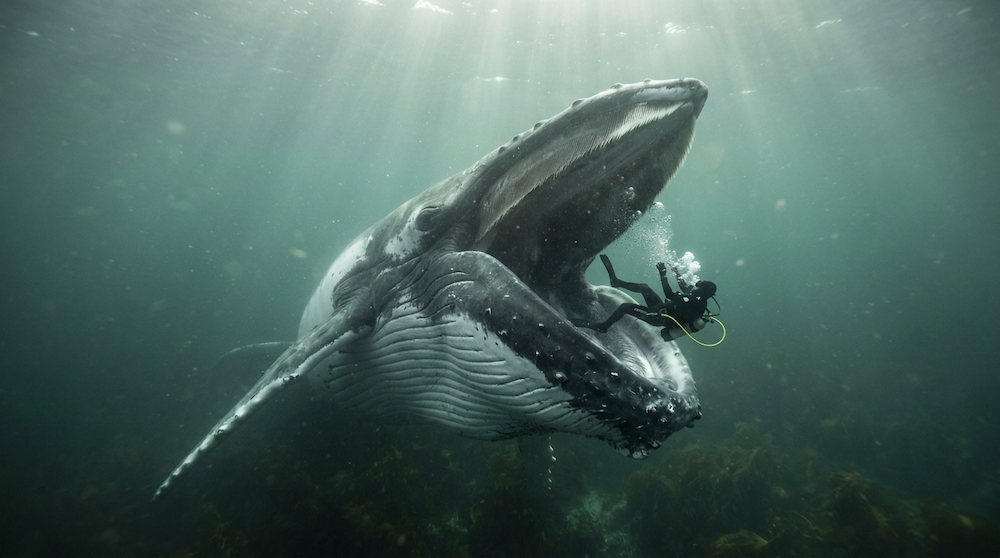
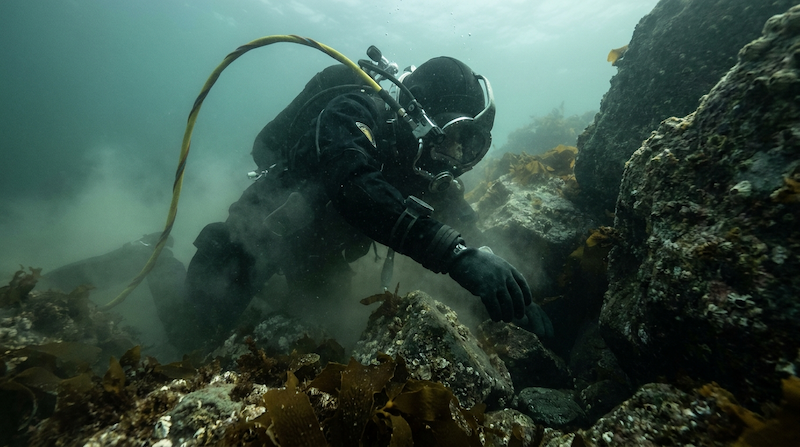
June 2021, off Herring Cove Beach, Provincetown. Michael Packard is a commercial lobster diver, and he's about 45 feet down doing what he has done for decades — working the bottom by hand, collecting lobsters, breathing off a hookah rig from the boat.
Then the light goes out.
Not dims. Goes. And at the same moment an enormous pressure closes around his entire body at once, from every direction, and he is moving without swimming.
His first thought is the one anybody's first thought would be off Cape Cod: a great white has him.
Then comes the observation that changes everything. He can't feel any teeth.
What that absence actually told him
Think about what that realisation involved. A man is being crushed in total darkness underwater and he runs a process of elimination.
No teeth means no shark. No seal. Nothing with a bite. It means he is inside something that closed around him whole.
He was in the mouth of a humpback whale.
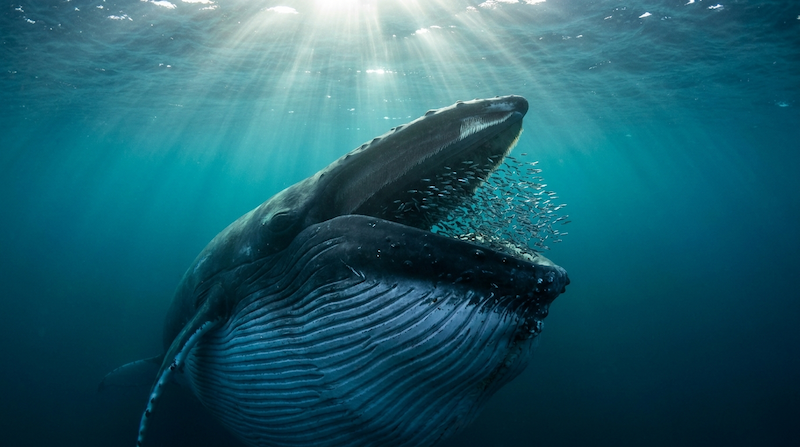
The animal had lunge-fed — the standard humpback feeding method, where the whale accelerates upward through a concentration of prey with its mouth open, engulfing an enormous volume of water in a single gulp. It hadn't hunted him. It had swum through the spot he happened to be occupying.
He estimates he was in there for 30 to 40 seconds. Conscious the whole time. In absolute darkness. With his air supply still running, which is the detail that probably kept him alive and calm enough to do what he did next.
He fought
This is the part I find most remarkable, and it isn't the whale.
He didn't freeze. He kicked and thrashed inside the animal's mouth — which, given he had no idea what was happening or how much air he had left, is an extraordinary decision made under conditions where most people would simply stop functioning.
The whale surfaced, shook its head violently, and ejected him into open water. His crewmate, who had been watching the surface for his bubbles, got him aboard.
He walked out of hospital the same day. Soft tissue damage and a dislocated knee.
Why he was never in danger of being swallowed
Here's the anatomy that makes this survivable, and it's counterintuitive enough that most people get it backwards.
Humpbacks have no teeth. They're baleen whales. The inside of that mouth is lined with flexible keratin plates that strain small prey out of water. There was nothing in there capable of biting him.
The throat is tiny. A baleen whale's oesophagus is narrow — for the largest species, roughly the width of a grapefruit. The mouth is enormous because it's a filter chamber, not a swallowing organ. The tongue pushes water back out through the baleen and only strained material goes down the pipe, and the pipe is small.
So the two things that make a whale terrifying in the popular imagination — the size of the mouth and the idea of being swallowed — are actually the two reasons he survived. He was inside a container with no teeth and no exit, and the whale's only real option was to spit him out.
Scientists said it was an accident, and explained why
The specialist reaction at the time was near-unanimous: this was not an attack. Humpbacks are not predators of large animals and have no reason to target a person.
The mechanism is simpler and more unsettling. A lunge-feeding humpback commits to the gulp. It accelerates into a patch of prey with its mouth opening wide, and at that moment its forward vision is substantially obstructed by its own jaws. It is, functionally, going in blind for the last part of the approach.
The whale had no idea he was there until it had already closed its mouth. By then the decision was made, and the only thing left was to work out how to undo it.
Which means the animal in this story spent those 30 to 40 seconds in a situation at least as confusing as the diver's.
The part people get wrong
The story circulated worldwide as "man swallowed by whale," and that's inaccurate in a way that matters.
He was never swallowed. He was inside the mouth, which for a baleen whale is a separate space from the digestive system, closed off by a throat far too narrow to admit him. There is no version of this event where he ends up in a stomach.
That distinction is why the Jonah comparison everyone reached for doesn't hold. For a person to actually be swallowed by a whale, you'd need a toothed whale with a wide throat — a sperm whale, hunting in deep water, thousands of feet down, where no lobster diver has ever been.
The whale that can swallow you and the whale that might accidentally scoop you up are two completely different animals, and they don't live in the same water.
My take
What stays with me here isn't the survival. It's the process of elimination in the dark.
Packard's account has him working the problem in real time under conditions specifically designed to prevent thinking — total darkness, crushing pressure, no orientation, no information, no obvious way this ends well. And what he did was notice an absence. There are no teeth. From that one negative observation he reached the correct conclusion about what had him.
Most of the time we identify things by what's present. He identified a humpback whale by what wasn't.
And the second thing: this was a collision, not an attack. The most famous whale-swallows-man story in modern history involves an animal that never noticed him, never intended anything, and got rid of him as fast as it physically could.
Two creatures ended up in the same cubic metre of the Atlantic by pure coincidence. Both were terrified. Both survived. Neither did anything wrong.
That's a far stranger story than a monster, and it's the true one.