Everyone Knows the Ice Floe Story — And Almost None of It Is True

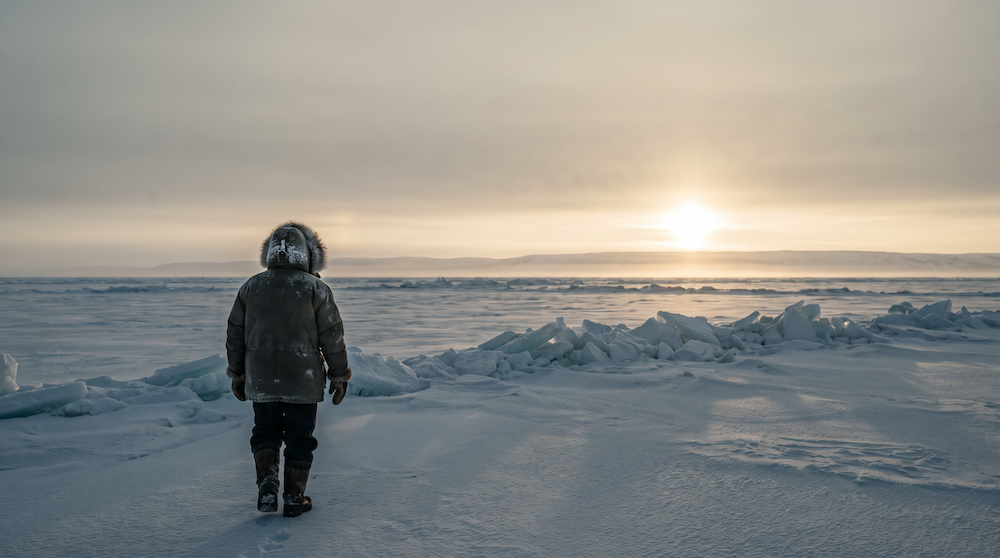
You've heard this one. When an Inuit elder grew too old to hunt, too slow to keep up, too much of a burden on a community living at the edge of starvation — the family would place them on a floating slab of ice and push it out to sea. A quiet farewell. A drifting death. The old person nods, understands, and disappears into the fog.
It's one of the most repeated images in popular anthropology. It shows up in novels, in films, in political speeches about elder care, in throwaway jokes about being put out to pasture. It's so familiar that most people have never once stopped to ask whether it actually happened.
I did stop to ask. And what I found is genuinely uncomfortable — not because the truth is worse than the story, but because it's more complicated, more human, and much harder to feel superior about.
The ice floe part is almost certainly invented
Let's deal with the picture first, because the picture is the problem.
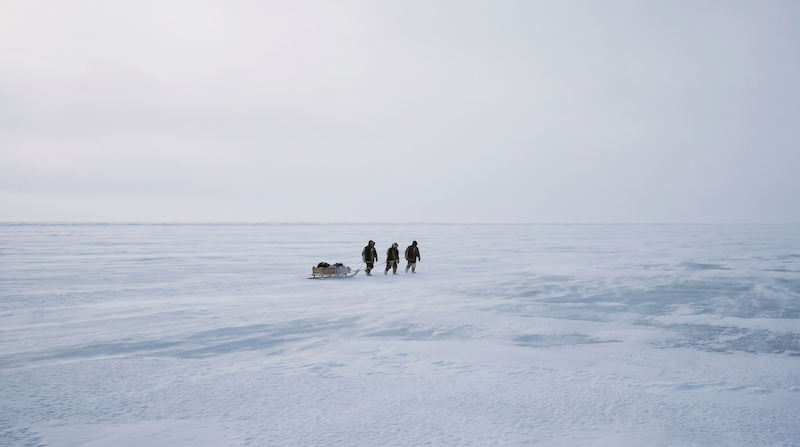
There is essentially no ethnographic support for the specific image of elders being set adrift on floating ice. The claim doesn't hold up, and it's logistically implausible on top of that — think about it for two seconds and it falls apart. You'd need a detached floe of the right size, in the right place, drifting the right way, at exactly the moment you needed it. Arctic sea ice in winter is not a collection of convenient rafts. For most of the year it's a single frozen sheet you can walk across for kilometres.
So where did it come from? My honest read is that it came from us. The drifting ice floe is a literary image — clean, silent, symbolic, and mercifully bloodless. It lets an outsider describe a killing without having to describe a killing. It turns a desperate act into something that looks almost like a ceremony. It's the version of the story a Victorian reader could tolerate at the dinner table.
And once an image like that gets into the culture, it never leaves.
But something real is underneath it
Here's where it gets difficult, because dismissing the whole thing as a myth would also be wrong.
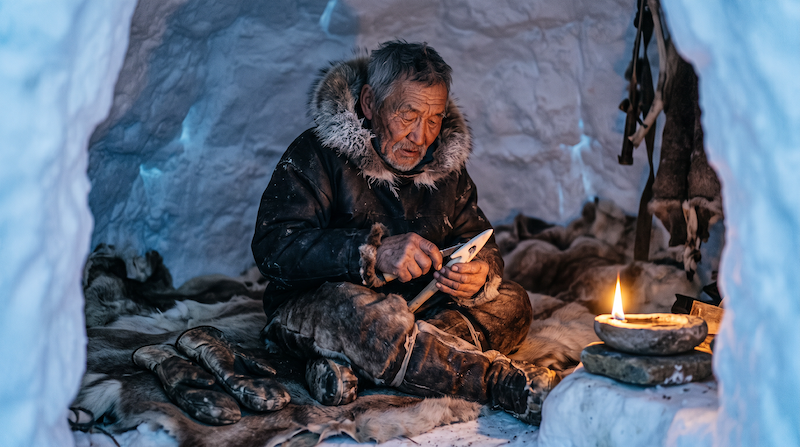
Early ethnographers did record the abandonment and killing of elderly and infirm people among some Inuit groups. The Danish-Greenlandic explorer Knud Rasmussen documented it among the Netsilik in the 1920s, recording a local explanation to the effect that the very old, whom death has not yet claimed, help death along. A decade later the French traveller Gontran de Poncins, also living among the Netsilik, described a son abandoning his mother in a blizzard — one of the last accounts of the practice on record.
So it happened. But the ethnographic detail matters enormously, and it's the detail that always gets stripped out.
It was rare, and it was famine-driven. Where the practice existed at all, it was uncommon outside times of starvation. As long as there was enough food, everyone was fed — including those who couldn't hunt. This wasn't a scheduled ritual triggered by a birthday. It was a crisis response, and Arctic crises could be years apart.
Abandonment was more common than killing. Far more often than any active method, the person was simply left — taken out and not returned for, or left behind while the camp moved on. And this is the part almost nobody mentions: it wasn't necessarily final. If conditions suddenly improved, people might go back for them. If an abandoned person made their own way home, they were taken back as a full member of the community, no stigma attached.
Some Inuit groups were disgusted by it. The practice was not universal, and it was regarded as repugnant by some communities — and where a family did harm an elder outside of genuine crisis, they carried real social stigma for it. There was no consensus. There was moral argument, the same as anywhere else.
The part that actually changed my mind
Then there's the fact that reframes the entire subject.
Most of what has been filed under "senilicide" is better described as assisted suicide, and assisted death at the person's own request was far more common than anything involuntary. The elder asked. And the request came loaded with a belief we tend to skip past: in many regions, dying by another person's hand — even by your own arrangement — was thought to lead to a better afterlife than dying by your own. The person asked to help was obliged to do it, and expected to do it without visible reluctance.
Sit with that for a moment. The dutiful, loving act in that framework is not refusing. It's complying — and doing it without letting your own grief make the dying person feel like a burden for asking.
That is not a story about people throwing away their old. It's a story about a community that had built a moral architecture for a situation we simply refuse to have a language for.
Why the myth is worth being angry about
I'll say plainly what I think.
The ice floe story survives because it flatters us. It lets a modern reader look at a people who lived, successfully, in one of the harshest environments on Earth for thousands of years — and feel a little bit civilised by comparison. Look what they did to their old people. Aren't we better.
Except we're the culture that invented the nursing home nobody visits. We're the culture that has entire wings of buildings full of people whose families call twice a year. If the standard is "does your society sometimes leave its elders alone at the end," none of us gets to be smug.
And there's a second thing that bothers me. In normal times, Inuit elders were not a burden at all — they were the library. In a society with no writing, the old people were the record: where the caribou crossed, which ice was safe in which month, what the stories meant, how to make the thing your life depended on. Losing an elder was losing data you could not replace. The idea that they were casually discarded gets the economics of the culture exactly backwards.
One more note worth making, since this comes up: "Eskimo" is the word you'll find in almost every older source quoted above, and it's considered outdated and offensive in Canada today. The people are Inuit. It's a small correction, but if a story has been misrepresented for a century, using the right name for the people in it seems like the least you can do.
What to take away
The tribe that left its old people on the ice is not a fable, and it is not a documentary. It's a real, rare, famine-driven practice that some Arctic communities carried out, that others rejected outright, that usually happened at the dying person's own request, and that has been flattened by outsiders into a single tidy image that probably never happened at all.
The truth is worse in one way and much better in another. It's worse because there was no gentle drifting away — there was cold, and a blizzard, and a son walking back to camp alone. It's better because behind it sits a community making an impossible choice together, with rules, with reluctance, and with something that genuinely resembles love.
We just prefer the ice floe. It asks less of us.
What do you think — is there any version of this we'd have handled better?