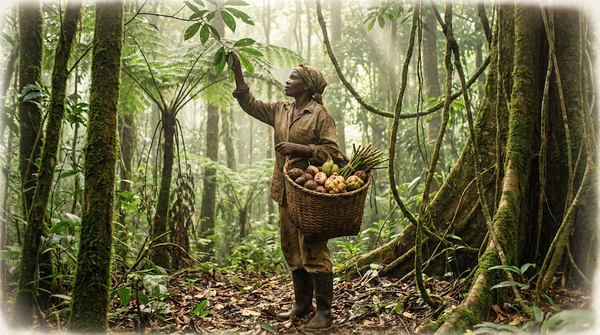
How Long Average American Would Last in the Wild Amazon Tribe?

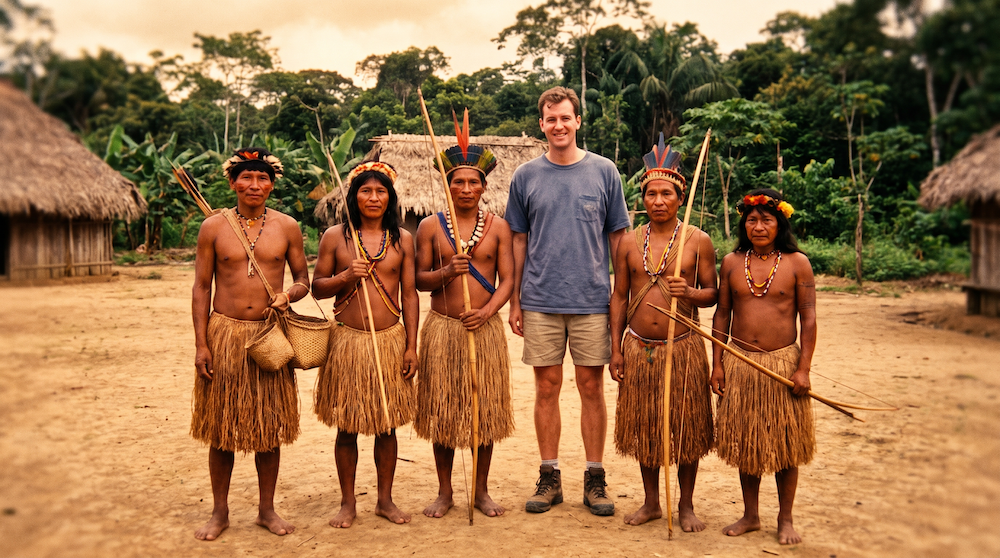
Drop an average American into a Yanomami or Matsés village and the question everyone asks is how long could they survive?
Wrong question. Alone in that forest, the answer is a few days. With the tribe, the answer is: as long as they choose to keep you alive. You would contribute nothing, understand nothing, and eat their food.
Here's the realistic timeline.
Days 1–3: The Water and the Ground
You'll drink from the river, because you'll have no choice. Within 48 hours you'll have giardia or amoebic dysentery, and in a climate where you're already sweating out litres a day, diarrhoea is not an inconvenience — it's the actual mechanism of death.
Then your feet. You've worn cushioned shoes your entire life. Barefoot on forest floor, you get cuts within hours, and in that humidity a small cut becomes an infected wound in two days. The tribe's soles are effectively leather. Yours are a liability.
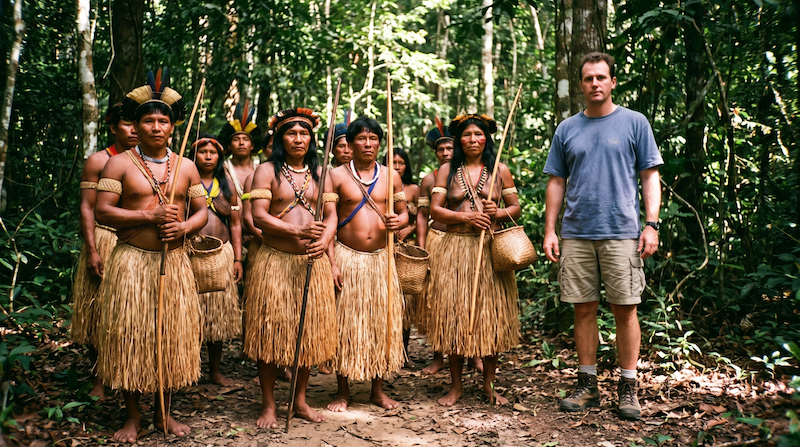
Week 1: You Cannot Eat What They Eat
Bitter manioc is the staple across much of the Amazon, and raw it contains compounds that release cyanide. It only becomes food through a long processing chain — grating, pressing, washing, roasting — that took generations to develop. Get it wrong and you are eating poison.
Everything else is a knowledge test you fail. Which palm heart, which grub, which fish, which frog to never touch. A Matsés child knows hundreds of edible and medicinal species by age ten. You know none.
So you eat what you're handed. You become a mouth.
Weeks 2–4: The Insects Get Inside You
Botfly larvae develop under the skin. Leishmaniasis, carried by sandflies, causes open sores that don't heal. Malaria hits hard in populations with no prior exposure — and that's you now.
Meanwhile the tribe walks 15–20 kilometres a day through terrain with no paths, hunting, hauling, climbing. You'd be trailing behind on day one and holding up the group by day three.
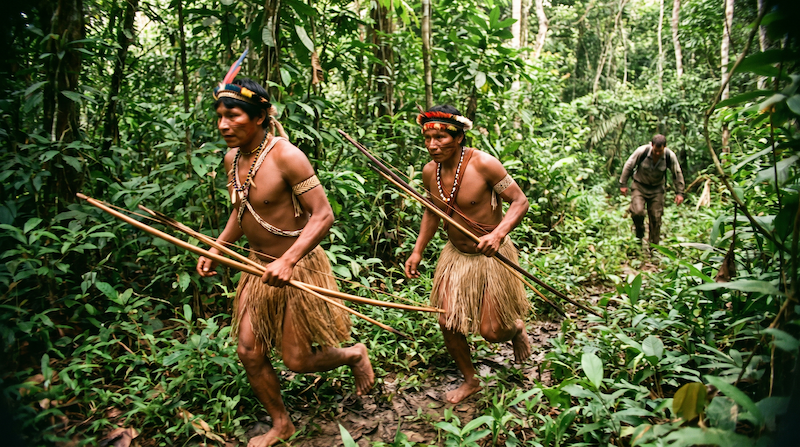
Month 2: You Are Useless, and Everyone Knows It
Here's the part that stings. You can't shoot a three-metre bow. You can't read a track. You can't tell which tree is safe to sit under. You can't navigate 100 metres from camp without getting lost.
In a group where every single person produces food, your presence is a straight subtraction. You are not a guest. You are a cost.
Month 6: The Only Survival Strategy That Works
If you're still alive, it's because of one thing: you shut up and became an apprentice.
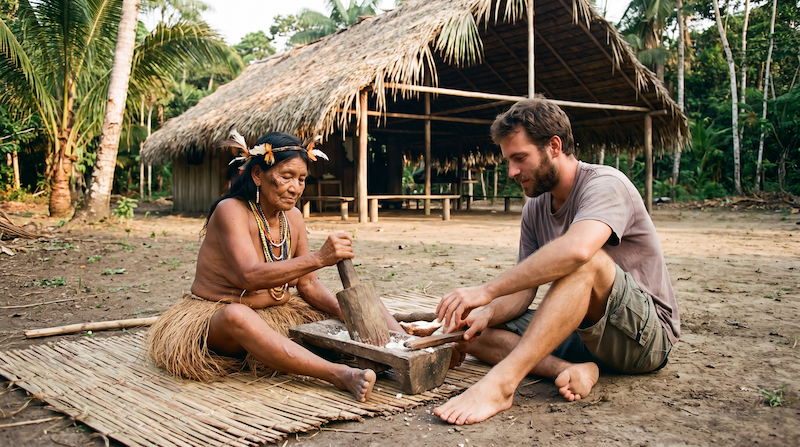
Not the outdoorsman fantasy — no fire-starting tricks, no leadership. The opposite. You'd have to accept the status of a small child, be taught the way a small child is taught, and be useful in the only ways available to you: carrying, hauling, watching, copying.
The Americans who have actually survived long stretches with Amazonian groups all did the same thing. They stopped trying to be capable and let themselves be raised again.
The Verdict
- Alone in the forest: 3–5 days. Water and heat, not jaguars.
- With the tribe, no cooperation: a few weeks before illness and uselessness end it.
- With the tribe, full submission: years — but only as a dependent, for as long as they tolerate feeding you.
The Amazon isn't a wilderness those people survive. It's a home they run at a level of skill you can't reach in a lifetime.
You wouldn't be Bear Grylls out there.
You'd be luggage.