Nobody Tells You the Real Reason You Can't Travel at Light Speed

You'd Die Long Before You Hit Light Speed — And Empty Space Is What Kills You
Everyone asks this question wrong, including me the first time.
"What if you travelled at the speed of light?" sounds like it should have an answer — some strange but describable experience, like a dream you can report on afterwards. It doesn't. If you have mass, the question is not difficult. It's invalid. There is no reference frame that travels at light speed, so there is no "you" in that scenario to experience anything at all.
So let's ask the version that does have an answer, and is far more disturbing: what happens on the way there?
The vacuum stops being empty
Interstellar space is the emptiest thing you'll ever encounter. Roughly one hydrogen atom per cubic centimetre. Nothing. A vacuum so good we can't reproduce it on Earth.
Now accelerate through it at 99% the speed of light.
Those lone hydrogen atoms are now hitting your hull at 99% of c. And a particle striking you at that speed doesn't behave like dust. It behaves like the beam inside a particle accelerator — because that is precisely what it is. You have effectively built the Large Hadron Collider and pointed it at your own face.
The emptiest region in the universe becomes a continuous wall of hard ionising radiation. Not "you'd need good shielding." You'd need metres of it, constantly ablating, and the faster you go the worse it gets, without limit.
The first thing that kills you at relativistic speed is nothing. Literally nothing. One atom per cubic centimetre.
The sky collapses into a dot
Then there's what you'd actually see, and this is the part that genuinely unsettles me.
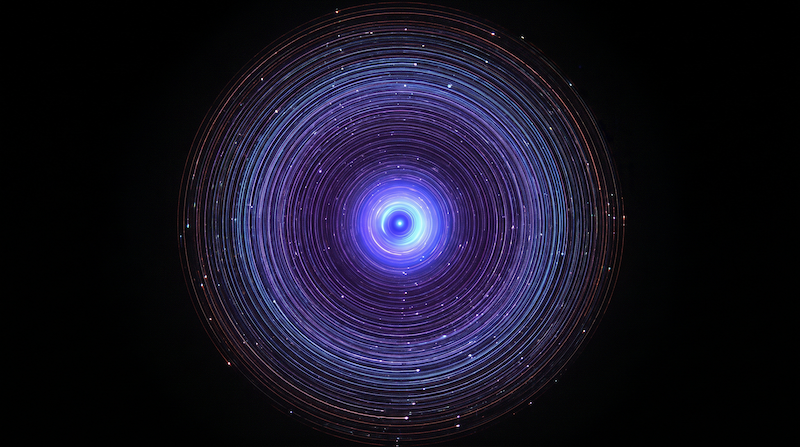
At relativistic speed, light coming at you gets swept forward — an effect called aberration. The faster you go, the more of the sky piles up in front of you. Stars that were behind you slide around into your forward view. Eventually the entire universe is compressed into a small, searingly bright circle directly ahead, and everything else is black.
At the same time, everything in that circle is blueshifted. Visible starlight climbs into ultraviolet, then X-ray. Even the cosmic microwave background — the faint cold afterglow of the Big Bang, currently harmless microwaves filling all of space — gets dragged up the spectrum. Push hard enough and the leftover warmth of creation itself becomes a gamma-ray blowtorch aimed at your windscreen.
Behind you: nothing. The rear sky reddens, dims, and goes out.
You're flying into a single blinding point in an otherwise perfectly black universe. That's the actual view. It's much stranger than the streaking star-lines every film shows you.
The energy bill nobody mentions
Say you weigh 70 kilograms and you want to reach 99.9% of light speed.
The kinetic energy required is around 1.3 × 10²⁰ joules. That's roughly 32,000 megatons of TNT — well over ten times the combined yield of every nuclear weapon currently on Earth.
For one person. Not the ship. Not the fuel. Not the shielding. Just your body.
And you never arrive at c, no matter how much you spend. Every increment costs more than the last, and the cost climbs toward infinity as you approach it. The universe doesn't forbid light speed with a wall. It forbids it with a price tag that never stops rising.
The part that actually costs you something
Here's the trade nobody puts on the poster.
Time dilation is real and it's generous. At 99.9% of light speed, time aboard your ship runs about 22 times slower than on Earth. Under a steady 1g acceleration — comfortable, Earth-normal gravity the whole way — you could reach the centre of our galaxy in roughly 20 years of your own life, and Andromeda in about 28.
You'd be middle-aged. Andromeda is 2.5 million light years away.
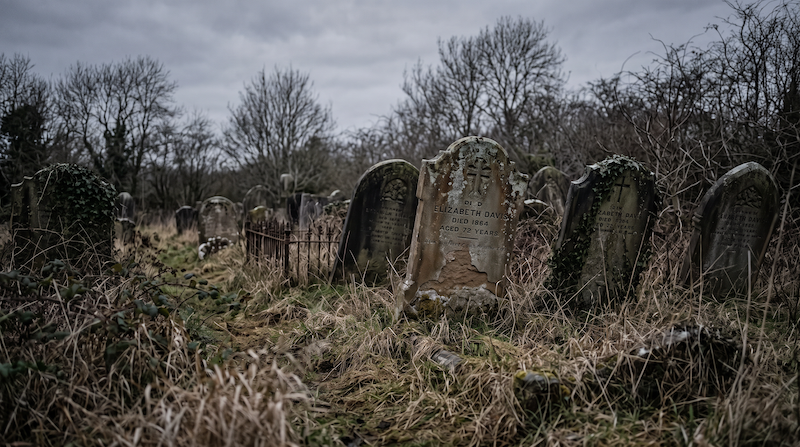
And that's the catch. Two and a half million years pass on Earth. Not for you — for everyone else. There is no version of relativistic travel where you go somewhere far and come back to the people who waved you off. Interstellar travel isn't a journey. It's a one-way trip through time that happens to move you sideways through space.
You don't get to tell anyone what you saw.
What I take from it
I used to think the speed of light was a speed limit — a rule, a cosmic traffic law, arbitrary and a bit annoying.
It isn't. It's a geometry. It's the structure of cause and effect. The reason nothing crosses it isn't that something stops you; it's that "faster than c" is as meaningful as "north of the North Pole." There's no direction left to go in.
And I've come round to thinking that's not a limitation. It's the only thing making the universe make sense. A cosmos without that boundary is one where effects arrive before causes, where the order of events depends on who's watching. Light speed is what keeps the story straight.
We're not trapped inside a slow universe. We're living inside a consistent one. The bill for that is the stars staying out of reach.
I'd still take the trip.
Would you? Knowing you'd arrive somewhere incredible and everyone you love would be dust — that's the real question, and it isn't a physics question at all.