The Only Siberian People Russia Could Never Conquer

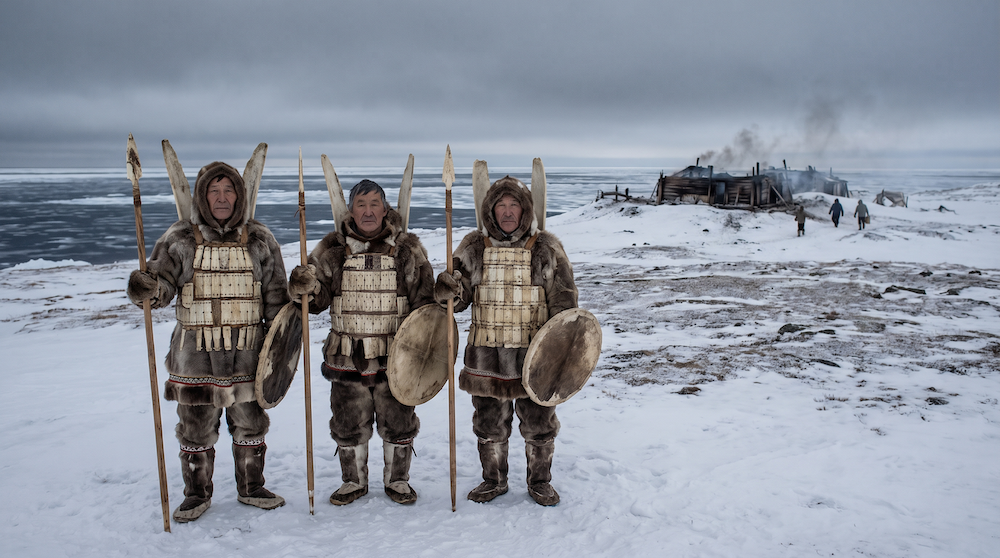
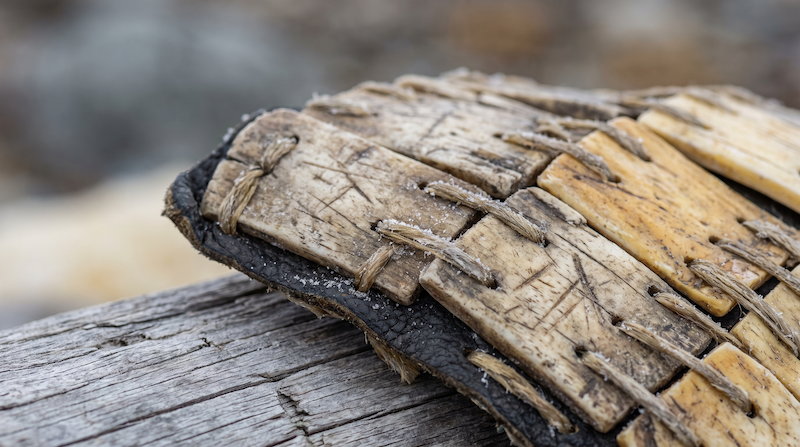
The Chukchi call themselves Luoravetlan — roughly, "the true people." They refused to become subjects of the tsar or pay yasak tribute, and fought the Russians for close to a century and a half.
They won. That part is reasonably well known. What happened next almost nobody talks about, and it's far better.
The empire did the maths and quit
The Russians built a fortress at Anadyrsk and used it as a base for punitive raids for over fifty years. It went badly.
In March 1747, Major Dmitry Pavlutsky spotted around six hundred Chukchi camped on a mountainside, attacked without waiting for reinforcements, and was encircled and killed. The Chukchi kept his head as a trophy for years.
But the thing that actually ended the war wasn't a battle. It was accounting. Anadyrsk had cost the treasury roughly 1,380,000 rubles and returned about 29,150 rubles in taxes, so in 1764 the government simply abandoned it. The retreating Russians burned their own fort behind them.
In 1779 Chukotka was formally incorporated into the Empire — with the Chukchi exempted from tribute and left in practical control of their own internal affairs. A conquest on paper, a defeat in every other sense.
The part nobody tells you
Here's the hidden half of the story.
Having beaten the Russians militarily, the Chukchi proceeded to make money off them — by becoming the indispensable middlemen in a trade network the Russians didn't understand and couldn't reach.
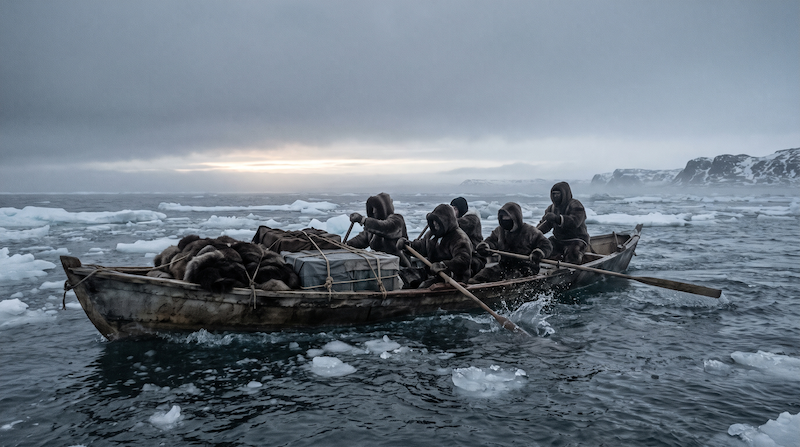
Furs originating in western Arctic Canada passed through a chain of native trade fairs, crossed the Bering Strait by skin boat, and were then hauled overland by Chukchi traders 800 miles west to meet Russian traders on a tributary of the Kolyma. Those middlemen then turned around and carried Russian manufactured goods back toward the strait — a native trade network spanning more than 2,000 miles.Tobacco, knives and beads flowed east from Russian posts to Alaska Natives; furs from as far away as the Mackenzie River flowed back west into Russian markets.
And the Chukchi guarded that middleman monopoly aggressively — sources on the period describe both their ingenuity in protecting it and their skill at negotiating favourable terms.When the American brig General San Martín reached the Bering Strait in 1819, it was arriving to compete with a supply chain the Chukchi had been quietly running for decades.
Why the raw frozen meat matters
The other detail people treat as shock value is actually medicine.
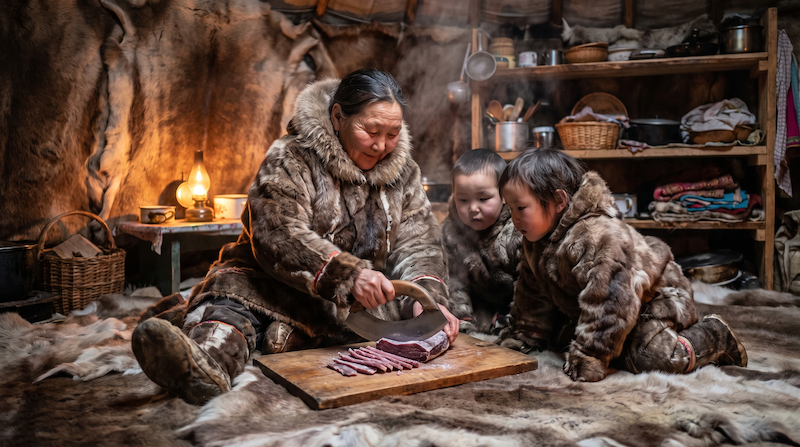
European Arctic expeditions were repeatedly destroyed by scurvy while local people living on almost nothing but meat stayed healthy. The reason is that fresh raw meat, blubber and skin contain enough vitamin C to prevent it — and cooking destroys most of it.
So eating whale skin and reindeer liver raw and frozen off the ice isn't a lack of refinement. It's the correct answer to a nutritional problem that killed hundreds of better-equipped Europeans who thought they knew better.
My take
We tell Arctic stories as endurance porn — look how tough, look how brutal, look how raw. I think that framing is the reason the interesting part gets lost.
The Chukchi didn't survive the Russian Empire by being fierce. Plenty of fierce peoples were crushed. They survived because they were strategically better than the state opposing them: they refused pitched battles, targeted supply convoys, made occupation cost more than it returned, and then — the genuinely clever move — converted their victory into a commercial position the loser depended on.
That isn't a story about bone armour. It's a story about a small people who read a giant empire correctly and out-negotiated it for two hundred years.
The verdict
Russia spent roughly forty-seven rubles for every one it collected out of Chukotka, then burned its own fort and left.
Then it started buying furs from the people who beat it.