A Nine Year Old Vanished in 1836 and Reappeared in 1860

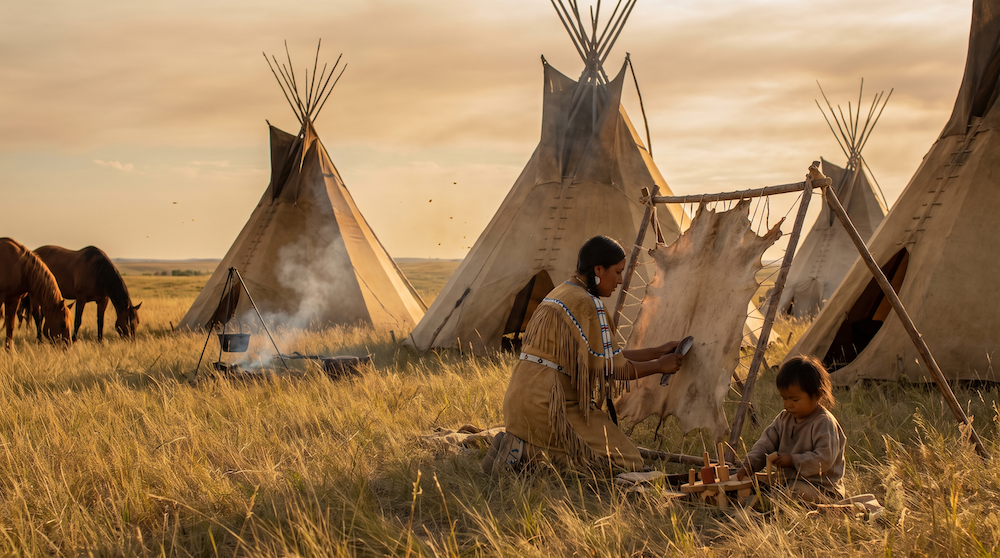
A company of Texas Rangers under Lawrence Sullivan Ross rides down on a Comanche camp on the Pease River. It's over quickly.
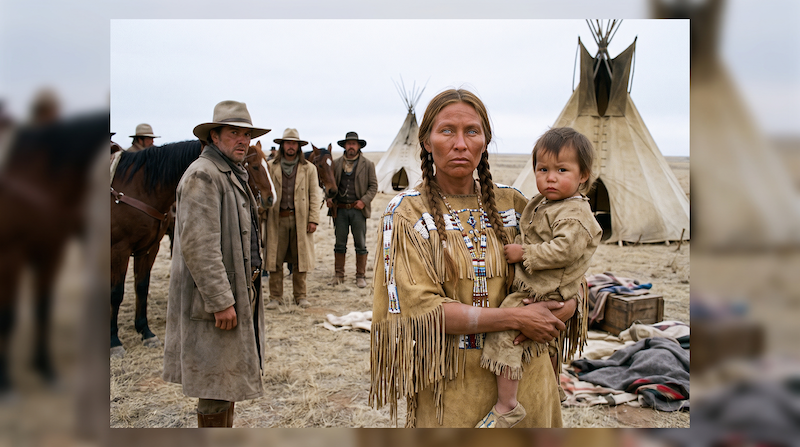
Among the people taken is a woman with a baby girl on her hip. She is dressed as a Comanche woman, she speaks Comanche, and she doesn't respond to English. The Rangers are about to move on when someone notices her eyes.
They're blue.
That single detail changes the course of the next ten years, and the woman it belongs to will spend every one of them trying to get back to the camp she was taken from.
May 1836
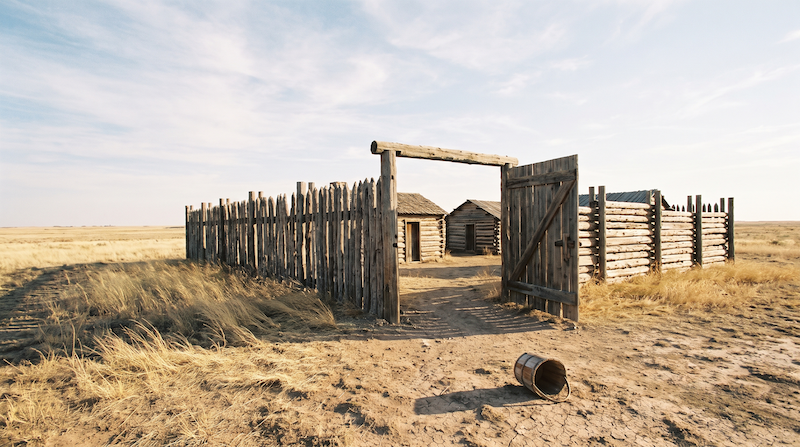
Twenty-four years earlier, a raiding party had struck a fortified settlement in Limestone County, Texas, built by the extended Parker family. Several settlers were killed. Five people were carried off.
One of them was Cynthia Ann Parker, aged about nine.
Three of the five captives were eventually ransomed or released within a few years. Cynthia Ann was not. She was adopted into a Comanche family, given the name Naduah, and raised as a daughter.
The years nobody recorded
Here is the strange shape of this story: the middle of her life, the part that actually mattered to her, is the part we know least about.
She grew up Comanche. She married Peta Nocona, a chief of the Nokoni band. She had three children — two sons, Quanah and Pecos, and a daughter, Topsannah.
We know she was offered a way out and refused it. On more than one occasion, traders and agents who encountered her attempted to ransom her back. Accounts describe her declining to go, avoiding contact, or simply not answering. One report from the 1840s has her saying that she was happy, that she was married, that she loved her husband and her children, and that she would not leave them.
By 1860 she had lived among the Comanche for two-thirds of her life. She was, in every functional sense, a Comanche woman with an unusual eye colour.
The rescue
Returned to her surviving white relatives, she was taken in by her uncle Isaac Parker. She reportedly identified herself with a phrase along the lines of me Cincee Ann — the name, apparently, being one of the few English fragments still available to her.
Texas treated her as a returned heroine. The state legislature granted her a league of land and a small annual pension. Newspapers ran her story.
She hated it.
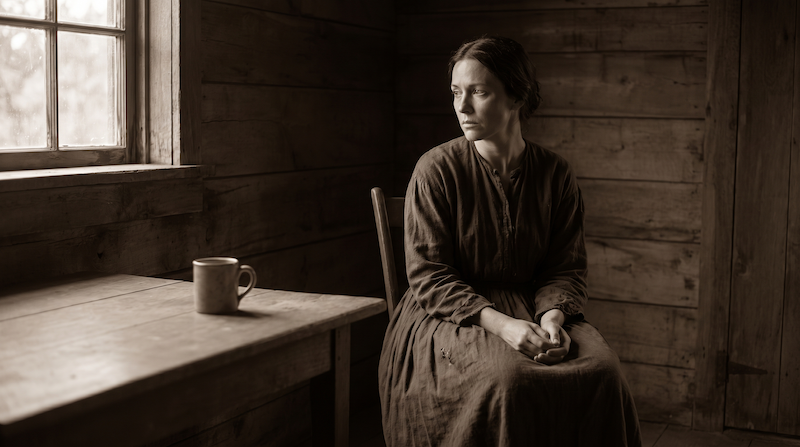
She tried to escape repeatedly and was brought back each time. She was, by every account of the family members who housed her, inconsolable — a grown woman held among strangers whose language she barely retained, cut off from a husband and two sons she had no way of contacting.
The word "rescue" appears in every 19th-century account of this. It has never sat right with me. She was recaptured. The Rangers took a woman out of her home and returned her to a family she had last seen as a small child, and Texas called it a happy ending because it fit the story the state wanted to tell about itself.
Her daughter Topsannah died of illness a few years later, around 1864. Cynthia Ann never recovered from it, and died around 1870, having never learned what happened to her sons.
The part the legend gets wrong
Sul Ross built a career on Pease River. He told the story for decades, and it carried him to the governorship of Texas.
His version had him personally killing Peta Nocona in the fight. That claim has been disputed for well over a century — including by Cynthia Ann's own son, who maintained his father survived the raid and died of an infected wound some years later. Historians have also questioned whether Pease River was a battle at all, or a raid on a hunting camp mostly occupied by women processing buffalo.
Which produces something worth sitting with. The most famous captivity story in Texas history was publicised largely by the man whose political career depended on it being dramatic.
Quanah
The son she lost track of became the most consequential Comanche leader of the era.
Quanah Parker led the Quahada band through the last years of armed resistance on the southern plains, surrendered in 1875, and then did something far harder than fighting: he became an effective negotiator, rancher and political figure on the reservation, arguing for his people inside a system built to dismantle them. He kept his mother's surname his entire life.
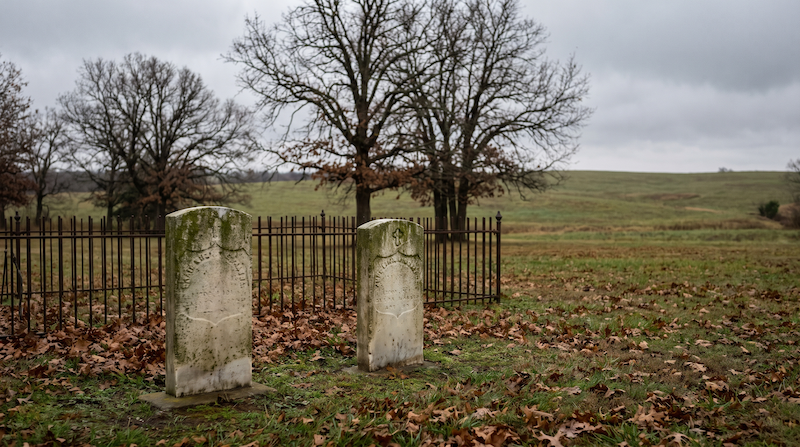
In 1910 he had her remains moved to Oklahoma and reburied. He died the following year and was buried beside her. Both were later moved again, to Fort Sill.
So the reunion did eventually happen. It just took fifty years and required both of them to be dead.
My take
The reason this story survived isn't that it's sad. It's that it broke a rule the 19th century needed to be true.
Captivity narratives were an enormous American genre, and they all ran one direction: the captive endures, the captive is delivered, civilisation is confirmed as the thing everybody wants. Cynthia Ann Parker's life ran the opposite way, in public, in front of witnesses, for a decade. She was offered civilisation repeatedly and kept walking away from it.
And she wasn't unusual. Benjamin Franklin noticed the same pattern a century earlier — white captives returned to colonial society frequently went back, while the reverse almost never happened. It was an uncomfortable observation then and it stayed uncomfortable.
What I take from her story isn't a claim about which culture was better. It's simpler and harder: home is the people you're with, not the people you came from. She was nine when that changed, and no amount of land grants, pensions or blood relation could change it back.
Texas gave her a hero's welcome for surviving the Comanche.
She spent the rest of her life trying to get back to them.