The Aquarium Fish That Gets Its Own Bodyguards

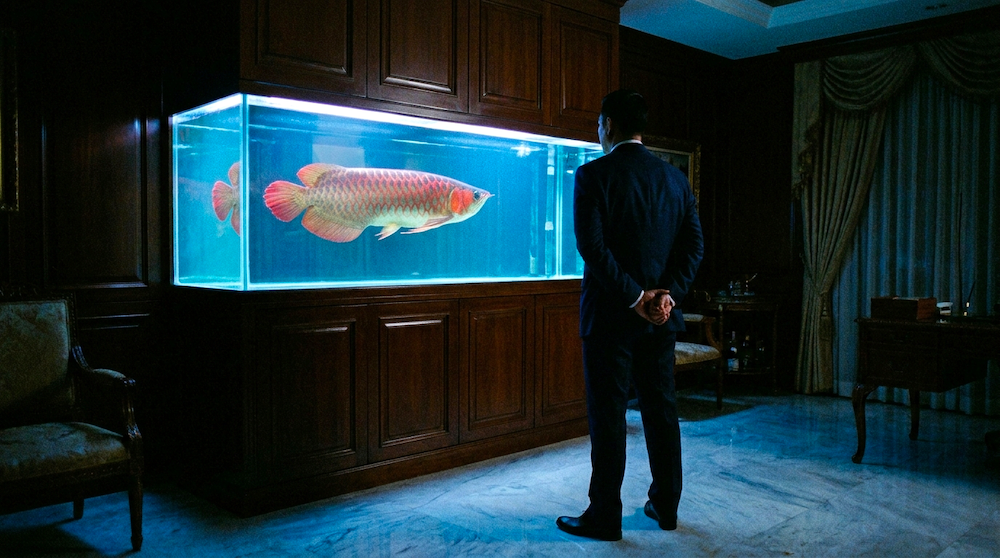
A fish reportedly changed hands in China in 2009 for around $300,000.
Not a rare coral. Not a shark. An aquarium fish roughly two feet long, of a species you could photograph in a tank without anyone thinking twice.
It's the Asian arowana — the dragon fish — and the story of how it got that expensive is one of the strangest examples of scarcity economics I've come across.
Why it looks like a dragon
Start with the animal itself, because the resemblance isn't a stretch.
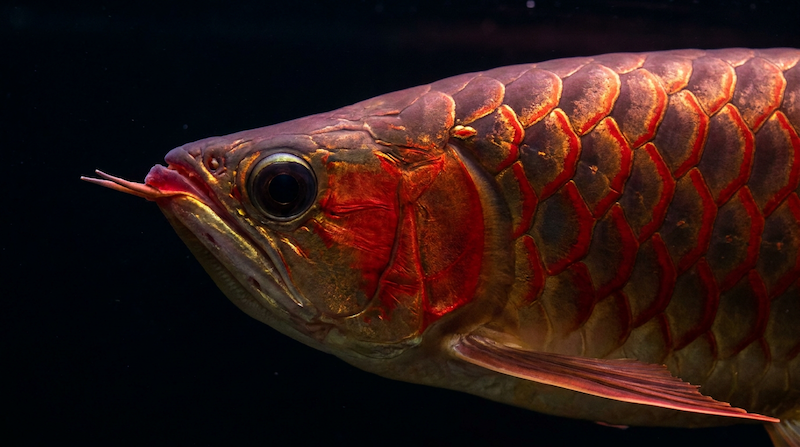
An arowana has large metallic scales that catch light in overlapping plates, a pair of barbels pointing forward from its lower lip, and a body that moves through water in a slow undulating line rather than darting. Put those three things together and you have something that reads, to anyone raised on Chinese iconography, as a living dragon.
In parts of Asia it carries a reputation for bringing wealth and warding off misfortune. That belief is the entire foundation of the market — the fish isn't valued as a pet or as a rarity for its own sake, it's valued as an object that is supposed to do something for the person who owns it.
The colour variants matter enormously. The super red and the platinum command the highest prices, and shades within those categories are graded with a precision that would be familiar to anyone who buys diamonds. A slightly deeper red across the gill plate is worth real money.
The legal wall
Now the part that seems to contradict the price.
The Asian arowana is listed as endangered and is heavily protected under international wildlife trade rules. In the United States it's off-limits under the Endangered Species Act — importing or owning one is effectively impossible for a private buyer.
Where the trade is legal, it runs on paperwork. Every legitimate specimen comes from a licensed captive-breeding operation, carries an implanted microchip, and travels with a certificate documenting its origin. Buyers need permits. Farms are registered and inspected.
That system was built to protect the species from being fished out of the wild. What it also did — inevitably — was create a closed, documented, permit-gated market in a living animal that a certain kind of buyer already believed conferred status.
A protection regime and a luxury credentialing system look identical from the outside. The microchip proves the fish is legal. It also proves the fish is real, traceable and expensive, which is exactly what a status object needs.
The bodyguards, and the surgery
Once a fish is worth six figures, it stops being livestock and starts being an asset, and the behaviour around it changes accordingly.
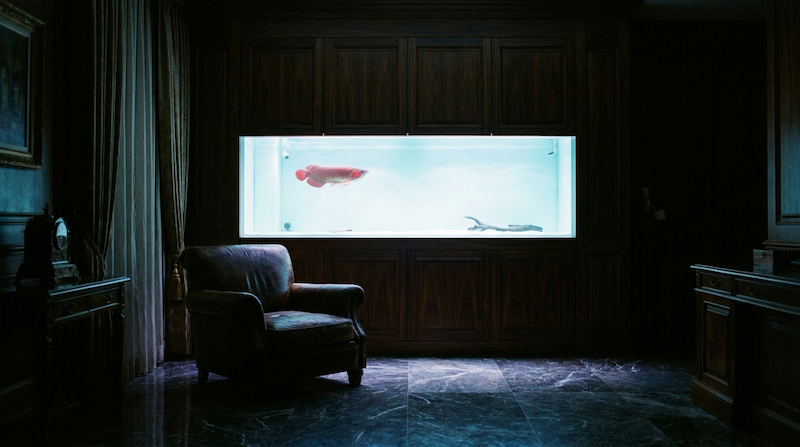
Wealthy collectors have hired security for their tanks. Not metaphorically — actual guards for a room containing a fish.
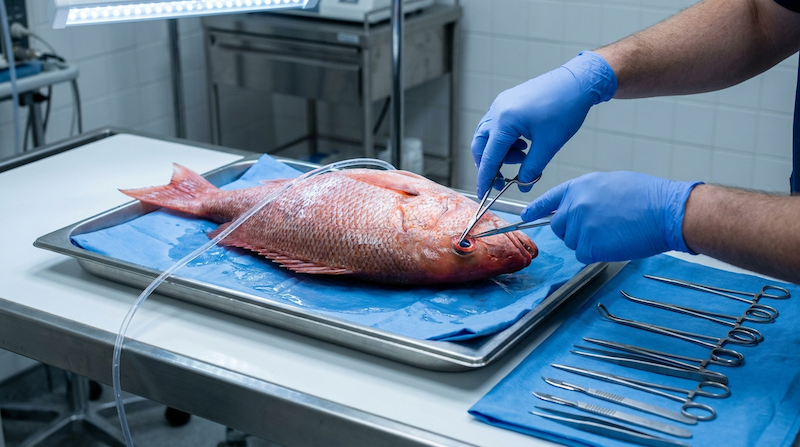
And then there's the cosmetic work. Specimens have undergone procedures to correct flaws that would reduce their grade: eye lifts to fix a drooping eye, and chin jobs to correct a protruding lower jaw. A minor physical imperfection can cut a fish's value substantially, so someone worked out that it was cheaper to operate than to accept the loss.
Sit with that for a second. There are surgeons whose practice includes facial correction on ornamental fish, and the economics support it.
What scarcity actually did here
Here's the mechanism, and it's worth spelling out because it runs the whole story.
Before the species collapsed, the arowana was a food fish. It was caught in Southeast Asian rivers and eaten. Not prized, not protected, not expensive.
Overfishing and habitat loss pushed it toward extinction. It went onto the protected lists. Wild capture stopped. Trade became restricted, licensed and documented.
And at that point the price went vertical — because the fish now had the two properties luxury markets require: a hard supply cap enforced by law, and paperwork proving you're one of the few people allowed to have one.
The protection didn't just save the species. It manufactured the value.
The unintended consequence
There's a wrinkle that complicates the happy version of this story.
When a wild-caught animal becomes valuable enough, protection creates poaching pressure rather than eliminating it. High prices give people in the fish's home range a strong incentive to take it from rivers where it's still hanging on — which is precisely the pressure the listing was meant to remove.
The captive-breeding farms are the safety valve. They supply the legal market at scale, which in principle removes the need to take wild fish. Whether that fully works is the same question conservationists argue about with every high-value protected species.
My take
I don't think the interesting thing here is rich people behaving strangely, though there's plenty of that.
What I find genuinely instructive is that the arowana demonstrates something uncomfortable about how value works. This fish did not become precious because it got rarer in any way that mattered to a buyer — captive-bred arowanas are produced in quantity, and you can buy one in Singapore without much difficulty if you have the money and the permit.
It became precious because a legal boundary was drawn around it. The scarcity is administrative, not biological. What the buyer is purchasing is the certificate as much as the animal.
And that's the part that flips the whole thing on its head. We usually think of endangered status as a tragedy that markets exploit afterwards. Here the sequence is tighter than that: the listing itself created the category of object, and the microchip that proves the fish was saved is the same microchip that proves the owner is rich.
A fish people used to eat now sits in a guarded tank, occasionally under a surgeon's light, because we made it illegal to catch.
It became priceless the moment it nearly disappeared — and the paperwork we invented to save it is what set the price.