Fifty Square Miles of America Where No Jury Can Sit

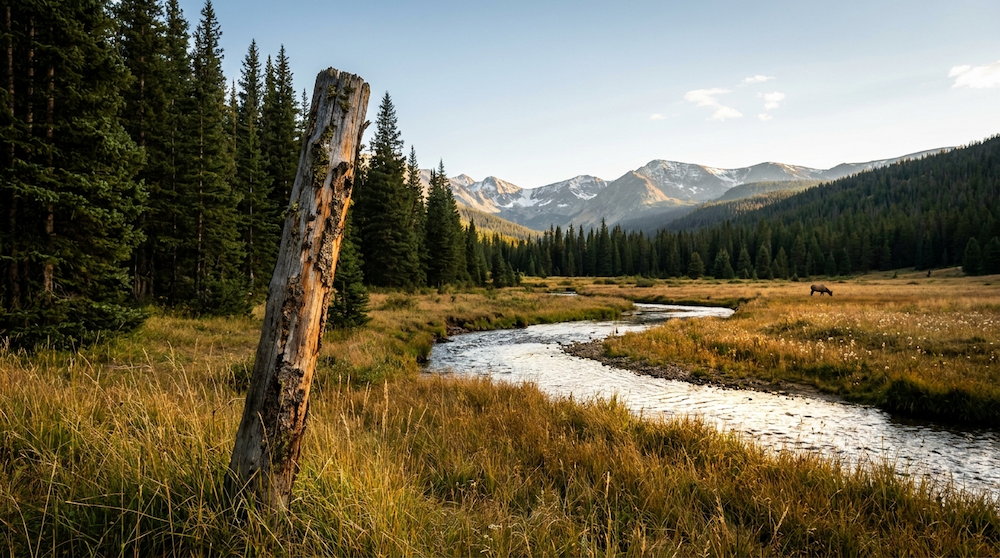
Yellowstone covers about 3,471 square miles. Roughly 96% of it is in Wyoming. Around 3% spills into Montana, and about 1% — a strip of roughly 50 square miles — sits inside Idaho.
That Idaho strip has lodgepole pine, rivers, a waterfall, grizzly bears and elk. It has no roads worth the name, no buildings, and no residents.
And because of a drafting decision made in 1872, it is arguably the one place in the United States where the federal government could not seat a constitutionally valid jury for the most serious charges it brings.
How the gap opened
Yellowstone became a national park in 1872 — before Wyoming, Montana or Idaho existed as states. Congress placed the entire park under the jurisdiction of the federal District Court for the District of Wyoming.
When the states were drawn afterwards, nobody adjusted the court boundary. The District of Wyoming remains the only federal district in the country that covers land in more than one state.
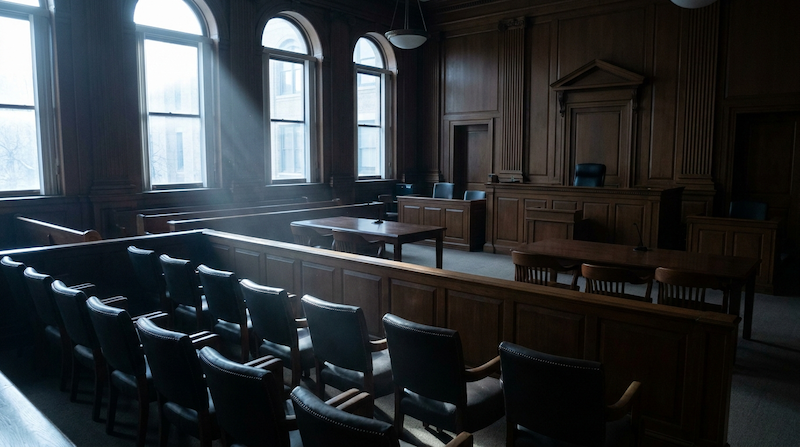
Now bring in the Constitution. The Sixth Amendment's Vicinage Clause guarantees a defendant a jury drawn from the state and the federal district where the offence took place.
For the Idaho strip, those two conditions produce an empty set. The state is Idaho. The district is Wyoming. The overlap is the 50 square miles of Yellowstone that lie in Idaho — and the only residents there are wildlife, which is not eligible for jury service.
No eligible pool means no jury. No jury means, in theory, no trial on the most serious federal charges.
The professor who found it
The gap was identified by Brian Kalt, a law professor at Michigan State University, and published in 2005 in the Georgetown Law Journal under the title "The Perfect Crime."
What's often lost in the retelling is how reluctantly he published it. Kalt worked to have Congress close the loophole first — contacting the Department of Justice, the US Attorney's Office in Wyoming and members of Congress before the article ran, specifically because he didn't want to hand anyone an idea. He asked the journal to delay publication while he tried.
He assumed it would be straightforward. The fix is to redraw the district line so the District of Wyoming follows the state boundary like every other district in the country. Kalt has said he actually wrote the statute himself — four lines long.
Nothing substantive came of it.
Twenty years of nothing
In 2022 an Idaho legislative committee recommended the state formally ask Congress to close the gap. Representative Colin Nash, a Boise attorney, sponsored the request, noting that no crimes had gone unprosecuted as far as he was aware.
That request went to Congress. Congress did not act.
As of late 2025, the loophole was still open. Kalt has confirmed he still thinks Congress should fix it — while adding a caveat worth quoting in spirit: he believes the danger is frequently sensationalised and overstated.
There's also disagreement about how real it is. A press secretary for Senator Jim Risch of Idaho indicated the senator wasn't especially concerned, on the view that Idaho retains its own jurisdiction there. Kalt disputes that reading, pointing to the statute placing Yellowstone under the sole and exclusive jurisdiction of the United States — which today means the District of Wyoming.
Nobody has tested it
This is the part that deserves more weight than it usually gets.
No case has ever tested the theory in court. The gap is a paper argument, not a demonstrated outcome.
And even on paper, it is narrower than the headlines suggest. Lesser charges that don't carry a jury-trial right are unaffected. Civil liability is unaffected. Park law enforcement still patrols, investigates and charges offences throughout Yellowstone, including the Idaho portion.
Kalt's own framing, in a follow-up paper, was that the point of publicising the blind spot was never to encourage anyone — it was to push Congress into eliminating the risk.
My take
The interesting question here isn't whether someone could exploit this. It's why nobody has bothered to close it.
The fix costs nothing. It creates no winners and no losers. It doesn't take money from one state and give it to another. It is a four-line technical correction to a boundary that was drawn before the surrounding states existed.
And twenty years on, it's still there — not because anyone opposes fixing it, but because nothing in the system rewards fixing it. There's no constituency, no press conference, no vote worth casting. A problem with no political upside simply doesn't get scheduled.
That's the actual lesson buried in this story, and it has nothing to do with Yellowstone. The gaps that survive longest in any legal system aren't the controversial ones. They're the ones nobody disagrees about.
Fifty square miles of pine forest have been sitting in a constitutional blind spot since 1872, and the only reason is that closing it was never anybody's job.