A Rare Allergy Turns Daylight Into A Medical Emergency

Step outside. Within five to ten minutes, the exposed skin turns red and wheals rise. Then itching, then burning.
Expose enough of your body and it stops being a skin problem. There is a documented risk of anaphylaxis if the whole body is exposed — the same systemic collapse as a severe peanut reaction.
The condition is solar urticaria, and the mechanism behind it is stranger than the symptom.
You are not actually allergic to sunlight
This is the part that gets lost in every viral version of this story, and it's the most interesting fact in the whole condition.
Light isn't a substance. Your immune system can't form an antibody against a wavelength. What actually happens is that radiation hits a molecule already sitting in your skin and changes it — creating a photoallergen, which then triggers mast cells to dump histamine through the normal IgE pathway.
So the allergen is manufactured on the spot, by your own body, out of your own tissue, the moment light touches it.
You aren't allergic to the sun. You're allergic to what the sun turns you into.
That also explains the timing. It's not a burn, which takes hours to develop. It's an allergic reaction, which is why it appears in minutes and — unlike sunburn — usually fades within an hour or two once you're out of the light.
The daily reality
Case reports give a clearer picture than statistics do.
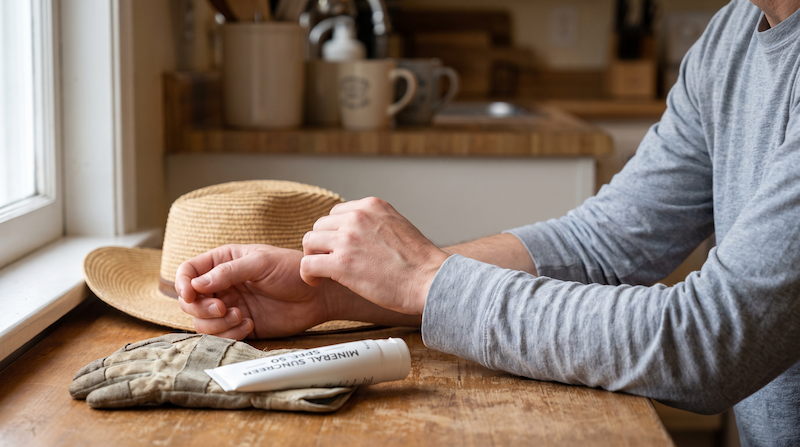
One 42-year-old woman had symptoms from 2012 but didn't take precautions until she nearly fainted after prolonged sun exposure. She then moved to strict protection — antihistamines taken before going out, zinc sunscreen, sun-protective clothing — and still had breakthrough reactions, with anaphylaxis whenever precautions slipped.
An 18-year-old's first symptoms appeared simply from walking in spring sunshine: itching and burning within minutes, then redness across every exposed area.
That's what makes this different from most allergies. You can avoid peanuts. You cannot avoid daylight without restructuring your entire life around it — and the trigger arrives through car windows, through office glass, on cloudy days.

What actually works
Here's where the "no cure" framing needs correcting. There's no cure, but the treatment picture has changed substantially.
A 2025 systematic review and meta-analysis found that omalizumab — an anti-IgE antibody originally approved for chronic urticaria — produced a response in about 93% of patients studied, with roughly 68% achieving complete remission. Phototherapy showed a similar overall response rate with a lower complete-response rate.
The suggested approach is stepwise: high-dose antihistamines first, phototherapy as an alternative where treatment centres are accessible, and omalizumab for those who don't respond adequately.
In one case, a patient who had failed antihistamines, hydroxychloroquine, azathioprine and low-dose steroids achieved remission within the first month on omalizumab and remained symptom-free — with follow-up phototesting coming back negative.
The honest caveat: a patient survey found that non-sedating antihistamines alone left most people with worsening, no change or only slight improvement, and that treatments overall still fail to produce complete remission for the majority. It's better than it was. It isn't solved.
My take
What strikes me about solar urticaria is how badly our intuitions handle it.
We treat sunlight as the default good — vitamin D, mood, health advice telling everyone to get outside more. An entire wellness industry is built on the assumption that daylight is medicine. For a small number of people it is, quite literally, the trigger for an emergency.
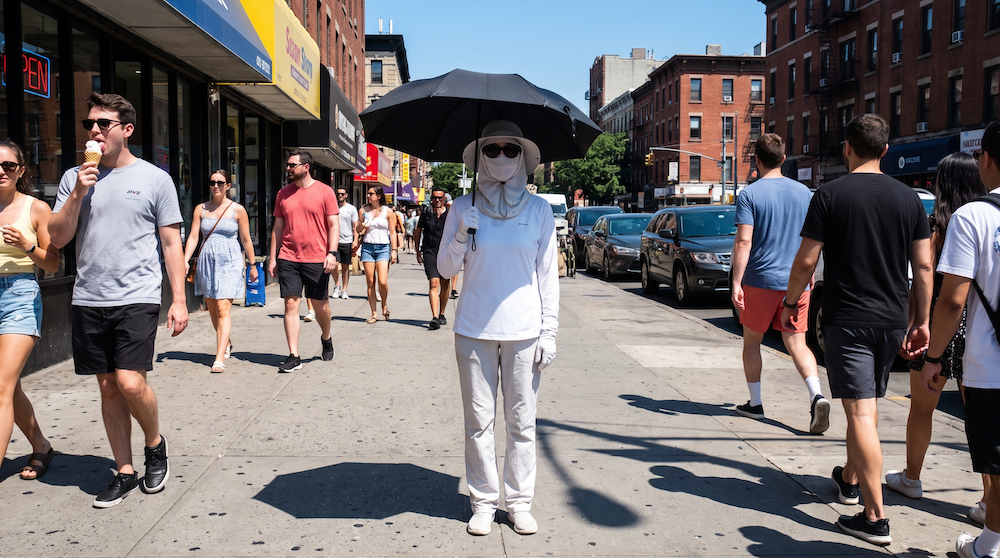
And because the condition is rare and invisible between attacks, the social cost is enormous. Someone covered head to toe on a hot beach doesn't look ill. They look eccentric. The reports consistently note severe quality-of-life impairment, and I suspect a large part of that isn't the hives at all — it's a lifetime of explaining yourself to people who think you're overreacting to nice weather.
Which is worth remembering the next time you see someone dressed for winter in July.
This is general information, not medical advice. Anyone getting hives or burning skin after sun exposure should see a dermatologist — diagnosis is done with controlled phototesting, and it's treatable.
The verdict
- Reactions begin within five to ten minutes and typically fade within an hour or two.
- The allergen is created in your skin by light, not carried in from outside.
- Whole-body exposure carries a real risk of anaphylaxis.
- There's no cure, but omalizumab produced complete remission in roughly two-thirds of studied patients.
Most allergies ask you to avoid a thing.
This one asks you to avoid the sky.