Florida Has 1.3 Million of Something in Every County

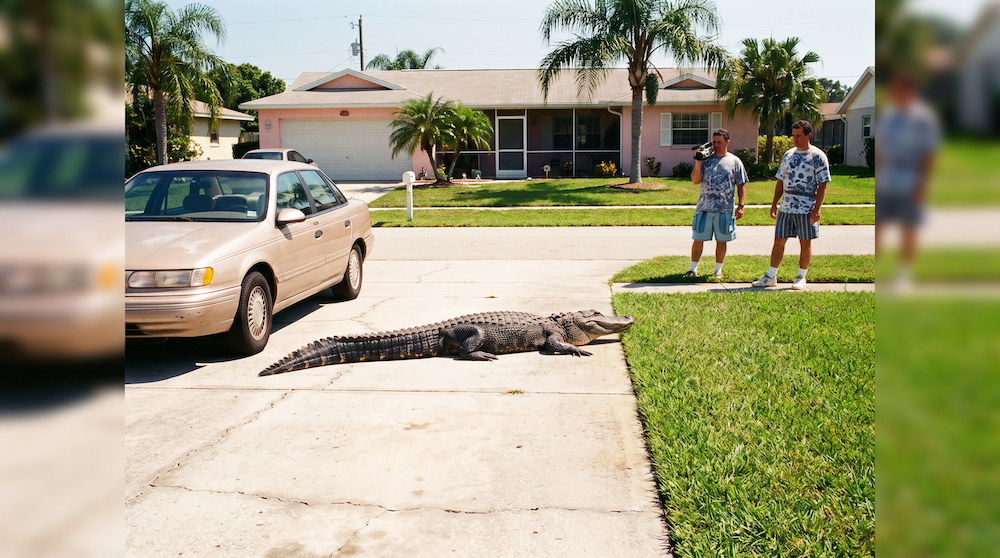
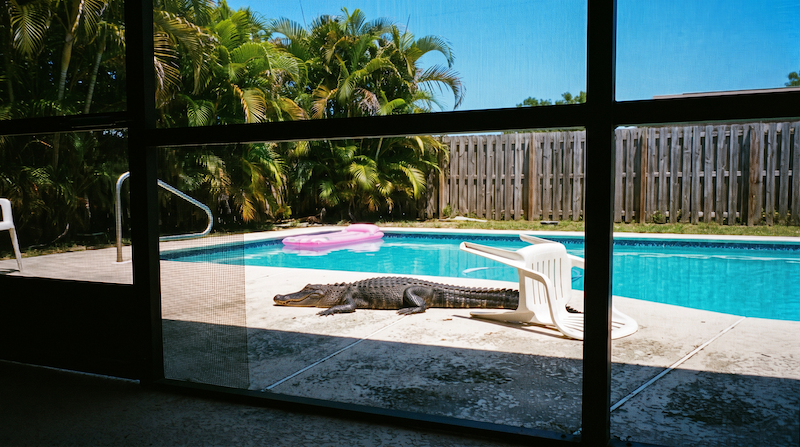
A woman in Fort Myers goes out to the lanai at seven in the morning and there is an eight-foot alligator in the swimming pool.
This is not a rare news story. It's a recurring one. Pools, golf course fairways, storm drains, garages, the drive-through lane at a fast food restaurant, once memorably a liquor store. Florida generates these headlines at a steady clip, and Floridians have mostly stopped finding them surprising.
There are roughly 1.3 million American alligators in Florida, and they are present in all 67 counties.
The advice is stricter than most people realise
Wildlife officials in Florida don't tell you to be careful near swamps. The actual guidance is broader and blunter: assume any body of fresh or brackish water could contain an alligator.
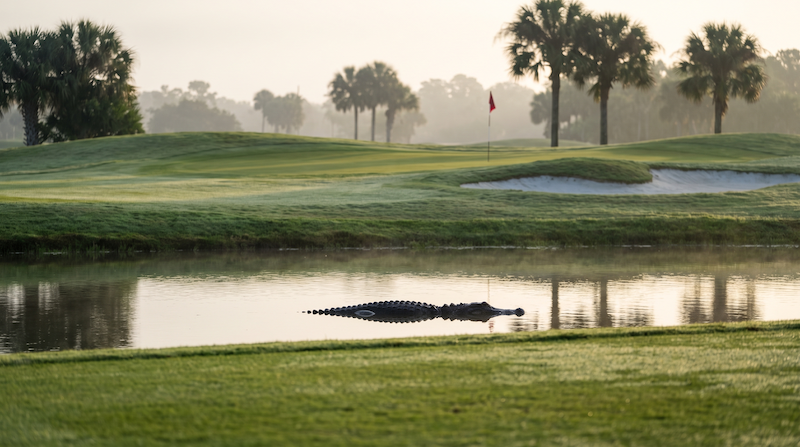
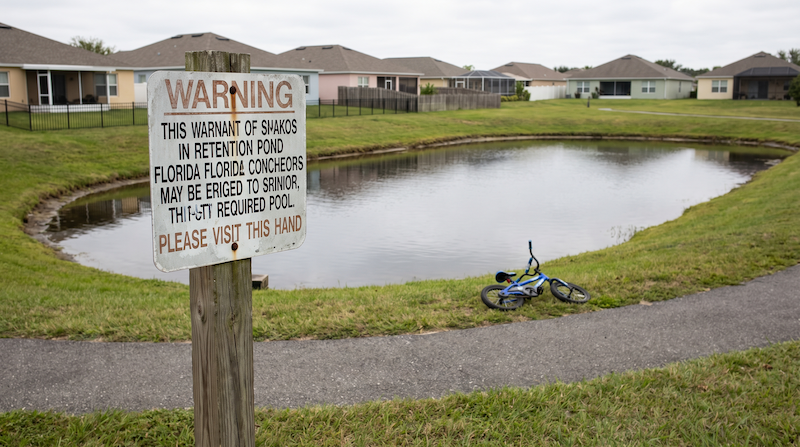
Any. Retention ponds behind shopping centres. Drainage canals. Golf course water hazards. The little lake in a housing development that was dug by a developer six years ago.
That last category matters more than people expect. Florida's residential building boom created an enormous number of artificial ponds, and an artificial pond is, from an alligator's perspective, indistinguishable from a natural one. We didn't build houses next to alligator habitat. We built alligator habitat next to houses, on purpose, for drainage and aesthetics.
Brackish water counts too. Alligators tolerate salt for limited periods, which is why they occasionally turn up in coastal areas and even on beaches — places where nobody is scanning the water for them.
Eight thousand removals a year
Florida runs a Statewide Nuisance Alligator Program, and its volume tells you how routine this is.
The programme fields tens of thousands of complaints annually and removes several thousand alligators a year — animals over four feet that are considered a threat to people, pets or property. Contracted trappers do the work.
An operation that size doesn't exist to handle unusual events. It exists because alligators showing up where people are is a normal, predictable, year-round feature of living in the state.
What actually causes bites
Here's the part I think deserves more attention than the "gator in a pool" headlines get.
Florida averages roughly eight serious unprovoked bites per year across a population of more than 22 million people plus over 100 million annual visitors. Fatalities are rare — a few dozen across more than seventy years of record-keeping.
So the risk to any individual is genuinely small. But the bites that do happen cluster around one specific human behaviour.
Feeding them. It's illegal in Florida, and it's illegal for a precise reason: a wild alligator avoids people. A fed alligator learns to associate humans with food and stops avoiding them. Every person who tosses a chicken wing off a dock is manufacturing the animal that bites someone else six months later.
The second factor is timing. Alligators become far more active and mobile during spring courtship and mating season, which is exactly when the "gator in the driveway" stories spike. They're not invading. They're travelling.
Two things people get wrong
Don't run in a zigzag. This is one of the most persistent myths in American folklore and it's nonsense. If an alligator comes at you on land, run in a straight line, away, fast. They're capable of a quick burst but tire almost immediately and have no interest in a pursuit.
Chlorine doesn't deter them. A swimming pool is, to an alligator, a small pond with unusually clean water and easy walls. Pool enclosures help; chemicals don't.
My take
The framing I'd resist is the one where Florida is uniquely dangerous and alligators are lurking villains.
The honest version is stranger and more interesting: Florida is a state that decided to live inside a predator's habitat and then engineered thousands of new ponds inside its own neighbourhoods. The alligator population isn't out of control — it's recovering. The species was listed as endangered in 1967 and came off the list in 1987, which is one of the great conservation successes in American history.
What's changed dramatically is the number of people. Florida added millions of residents in the decades that alligators were recovering, and the two curves crossed.
So the water being "never really empty" isn't a horror-movie fact. It's the arithmetic of putting 23 million people and 1.3 million large reptiles in the same subtropical peninsula and being surprised when they meet in a parking lot.
The practical version: don't swim in fresh water at dawn or dusk, keep dogs on a short leash away from the waterline, don't let children play at the edge of any pond, and never, ever feed one.