The Fold in the Corner of Your Eye Is a Third Eyelid

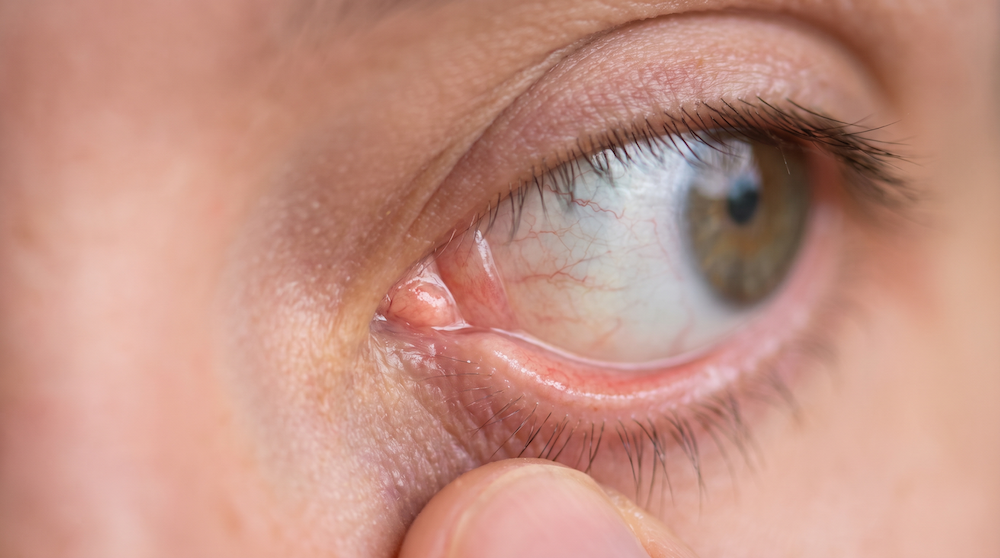
Go to a mirror. Pull your lower eyelid down and look at the inner corner, near your nose.
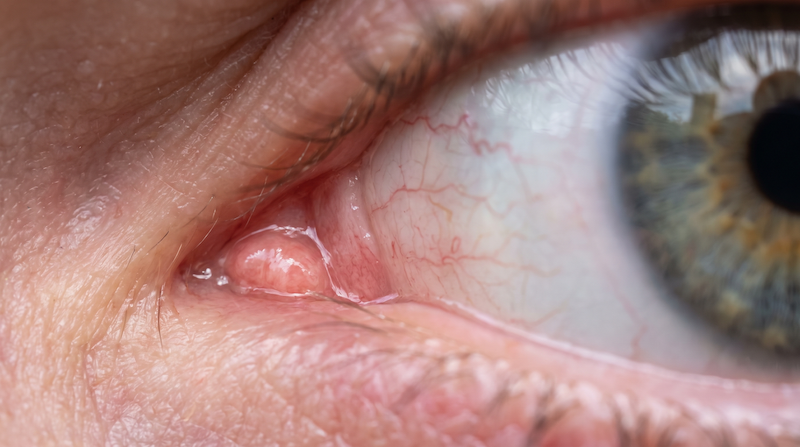
You'll see a small pink lump, and just beside it a thin crescent-shaped fold of pink tissue curving toward your eyeball.
That fold is the plica semilunaris, and it's the leftover of a third eyelid your ancestors used to sweep across their eyes. Yours hasn't done that in tens of millions of years.
The lump and the fold are two different things
Worth being precise, because almost every version of this fact online gets it wrong.
The rounded pink lump is the lacrimal caruncle — a small blob of skin, sweat and oil glands that produces the gritty stuff you find in the corner of your eyes in the morning.
The vestigial third eyelid is the crescent-shaped fold next to it, running vertically along the inner edge of the eyeball. That's the piece with the ancient history. If you're going to look for it, look for the curve, not the bump.
What it does in animals that still use it
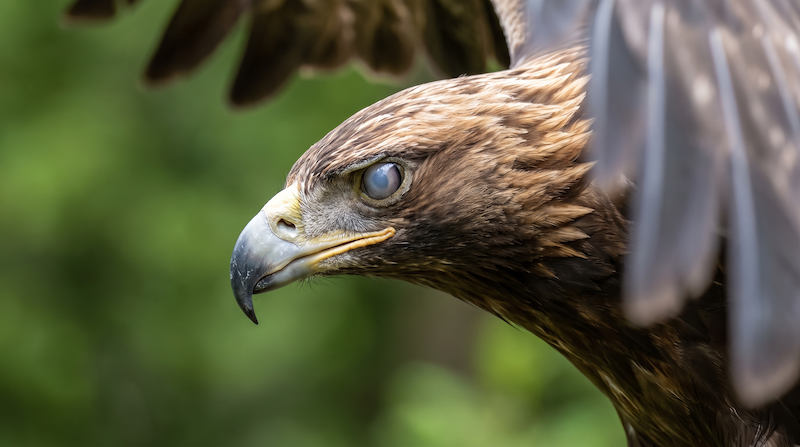
A working nictitating membrane is a transparent or semi-transparent lid that sweeps sideways across the eye instead of up and down. It cleans, moistens and shields without blinding the animal, because it can see through it.
The uses are wildly varied:
- Birds of prey close theirs during a dive and while feeding chicks, protecting the eye from wind and from their own young's beaks.
- Woodpeckers snap theirs shut a fraction of a second before each strike. It acts as a restraint that stops the eyeball being damaged by the deceleration.
- Polar bears use theirs as built-in snow goggles, filtering glare off the ice and reducing snow blindness.
- Camels rely on theirs during sandstorms — a windscreen they can still see through.
- Crocodiles and some sharks deploy theirs underwater, effectively as goggles.
- Cats and dogs still have one, usually invisible until they're sedated or unwell, which is why a visible "third eyelid" is a warning sign at the vet.
Why primates lost it
The honest answer is that nobody is certain, but the leading explanation is that we traded it for something better.
Primates developed forward-facing eyes, excellent colour vision, and — critically — hands. An animal with hands can rub its own eyes, wipe away debris, and shield its face. A membrane that sweeps automatically is redundant once you can just lift a finger.
Full daylight-adapted eyelids and a strong tear film handled the cleaning. The third eyelid stopped being maintained, and evolution doesn't keep paying for machinery nobody uses.
The part I'd push back on
You'll see it claimed that this is the only visible fossil in the human body. It isn't, and I think the truth is more fun than the myth, because there are several and you can test some of them right now:
- Goosebumps are your body trying to fluff up fur you no longer have.
- Your tailbone is four fused vertebrae — a tail, packed away.
- Ear-wiggling muscles are still wired in. Some people can move their ears; that's the same system a cat uses to swivel them toward a sound.
- The palmaris longus tendon. Touch your thumb to your little finger and flex your wrist. A cord probably pops up in the middle of your inner wrist. Roughly one in ten people don't have it at all, and its absence changes nothing — surgeons harvest it for grafts precisely because it's spare.
So the plica isn't a lone relic. It's one item in a small museum you're carrying around.
My take
What gets me about the plica semilunaris isn't that it's useless. It's that it might not be.
Some anatomists argue it isn't fully vestigial — that the fold gives the eyeball room to rotate fully without the conjunctiva tearing, and helps channel tears toward the drainage duct. If that's right, then a structure built for one job millions of years ago was quietly repurposed into a smaller one and kept.
That's a better story than "leftover junk." Evolution doesn't tidy up. It leaves the old parts lying around, and occasionally something finds a new use for them.
The verdict
You have two third eyelids. They're in the inner corner of each eye, they're the same structure a polar bear uses against snow glare, and yours haven't swept across anything since long before humans existed.
You've been looking at them in the mirror your whole life.
You just didn't know they had a name.