What If The Moon Suddenly Disappeared Over America

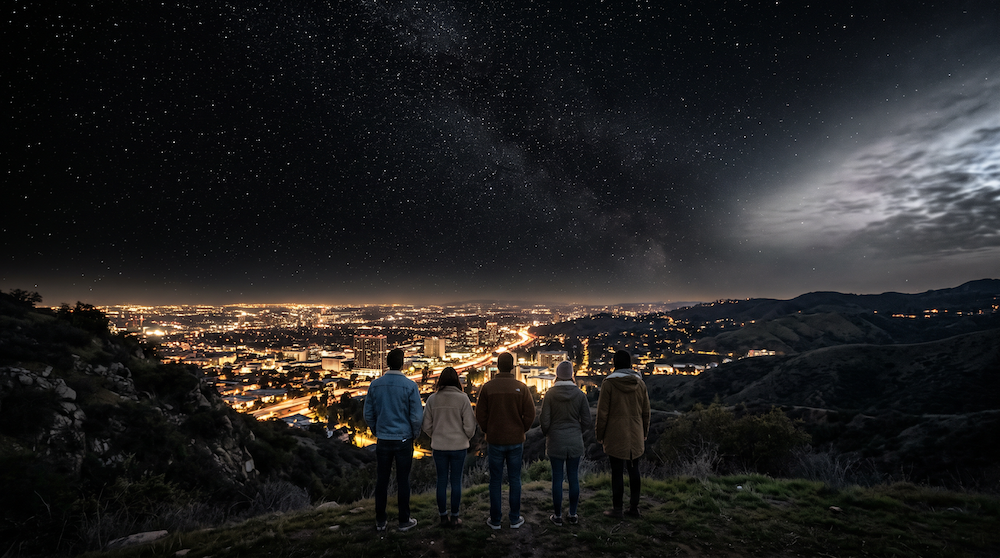
It's 2:14 a.m. over Kansas. The Moon is a bright three-quarter disc in a clear sky.
Then it isn't.
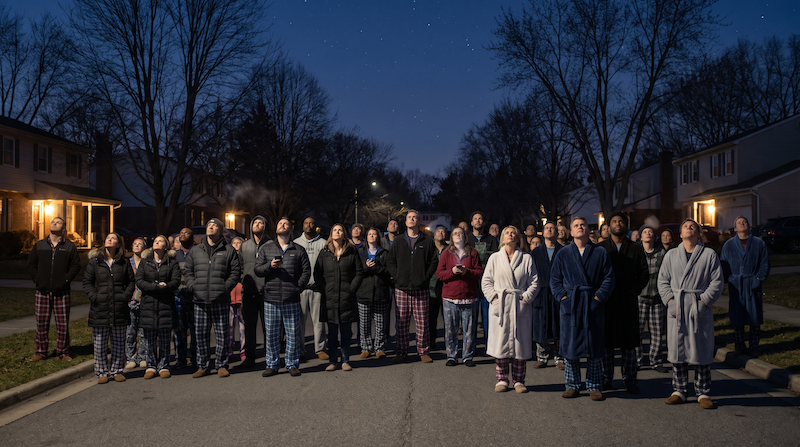
No flash, no debris, no sound. The sky simply closes over the space where it was. Because of where the Earth is turned at that moment, North America is the half of the planet looking straight at it — which means for about twelve hours, the United States is the only place on Earth with eyewitnesses, and everywhere else has to take their word for it.
That twelve hours is the strangest part of the whole scenario.
The first night is only quiet
Nothing physical happens immediately. Gravity is not instantaneous, but it's not slow either — the change propagates at light speed, and the Moon is only about 1.3 light-seconds away. So the pull is gone almost at once, but there's nothing to feel.
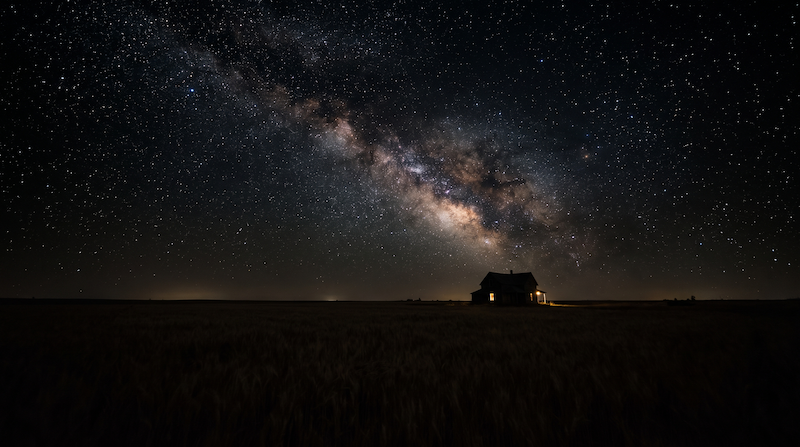
What you'd notice is darkness. A full Moon lights the ground at roughly 0.25 lux. That sounds like nothing until it's gone and you understand that every rural road, every field, every animal that hunts at night has been operating with that as the baseline for four billion years.
By dawn, the coasts are the story
The Moon drives roughly two-thirds of Earth's tides; the Sun handles the rest.
So the tides don't stop — they collapse to about a third of their normal range and start following the Sun instead. Within a single day, the tidal cycle across US coastlines resets to something no chart, no harbour, no fishing fleet and no port authority has ever operated under.
The Bay of Fundy up the coast, which currently runs one of the largest tidal ranges on Earth at around 16 metres, becomes a fraction of itself. Tidal estuaries stop flushing. Salt marshes that depend on regular inundation begin to die, and with them the nurseries for a large share of commercial fish stocks.
The animals break before the systems do
This is the part I find most interesting, and it's the part every disaster movie skips.
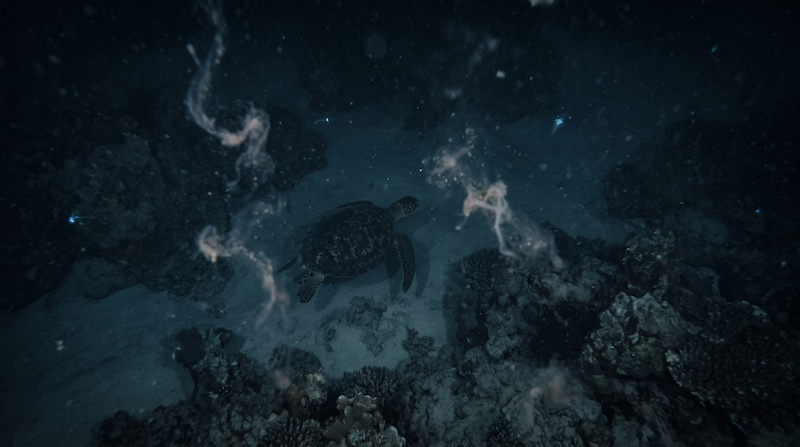
Corals across the Florida Keys and the Pacific time mass spawning events to lunar cycles — entire reefs releasing at once, on a signal that has just been deleted. Sea turtles use it. Many nocturnal predators hunt on a lunar schedule. Dung beetles, remarkably, navigate by moonlight polarisation.
None of these species get a memo. They just start failing to reproduce, in the same season, worldwide.
The slow catastrophe takes thousands of years
The Moon is what stabilises Earth's axial tilt. That tilt sits at about 23.4 degrees and wobbles only slightly, and that stability is why seasons are predictable enough for agriculture to exist.
Remove the Moon and the tilt is free to wander over long timescales — potentially by tens of degrees. That's not a weather problem. That's a climate that no longer repeats: centuries where the Midwest has no reliable growing season, followed by centuries where it does.
Also, and few people know this: the Moon has been slowing Earth's spin for billions of years. Take it away and that braking stops. Days stay near 24 hours instead of continuing to lengthen — a small mercy, but a permanent one.
My take
The Moon disappearing is usually sold as a doomsday scenario, and I don't think that's right. Nothing explodes. Earth's orbit around the Sun barely changes, because the Sun does that job.
What actually happens is subtler and worse: every natural rhythm we built civilisation on quietly desynchronises. Tides, spawning cycles, migration, seasons. We'd survive it. Coastal ecosystems and the fisheries attached to them mostly wouldn't.
And there's a human cost nobody prices in. Every culture on Earth has a calendar, a festival, or a story tied to that object. Losing it would be the first time in history that all of humanity lost the same thing on the same night.
The verdict
- First hour: darkness, and about twelve hours where only America has seen it.
- First day: tides drop to roughly a third, driven by the Sun alone.
- First year: coastal ecosystems and lunar-timed species begin collapsing.
- First millennia: Earth's tilt starts to wander and stable seasons end.
The Moon isn't holding us in place. It's keeping time.
Take away the clock and nothing stops — everything just slowly stops agreeing.