Why Parts of the Ocean Turn Purple and Smell of Eggs

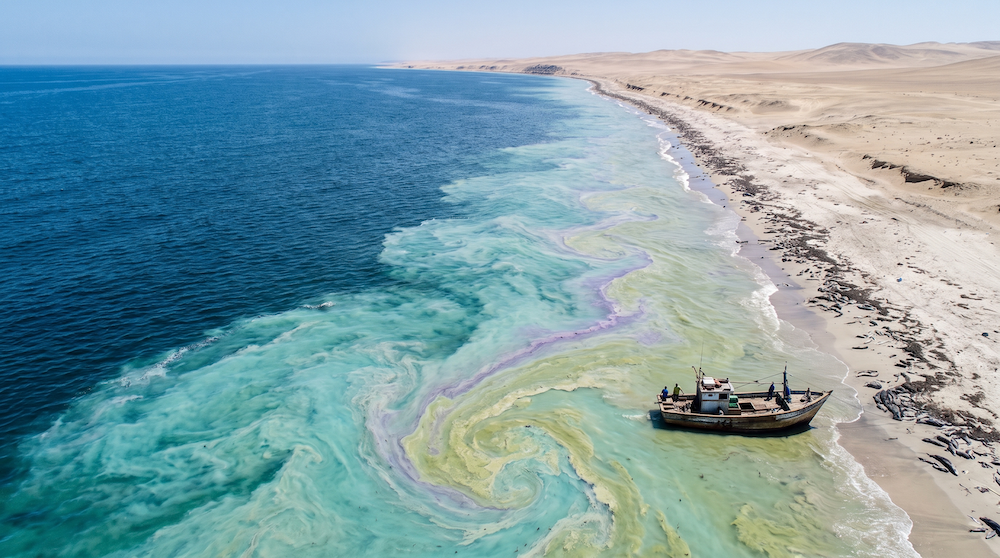
Picture the ocean losing its oxygen and you probably imagine emptiness. Clear, still, lifeless water.
That's not what happens. What happens is that the water gets taken over — and it changes colour.
The handover
Oxygen isn't just what fish breathe. It's what determines which forms of life are allowed to run the place.
Pull it out and everything with gills dies or flees. But the water doesn't go sterile. It gets colonised by organisms that were waiting — sulfate-reducing bacteria, which don't need oxygen at all and which breathe sulfate instead, exhaling hydrogen sulfide as waste.
That's the rotten-egg gas. And once it accumulates, purple and green sulfur bacteria move in to feed on it, and they carry pigments that tint the water.
A dying ocean isn't empty. It's crowded with the wrong things, and it announces itself by changing colour and smelling like a broken drain.
It's happening on the Namibian coast right now
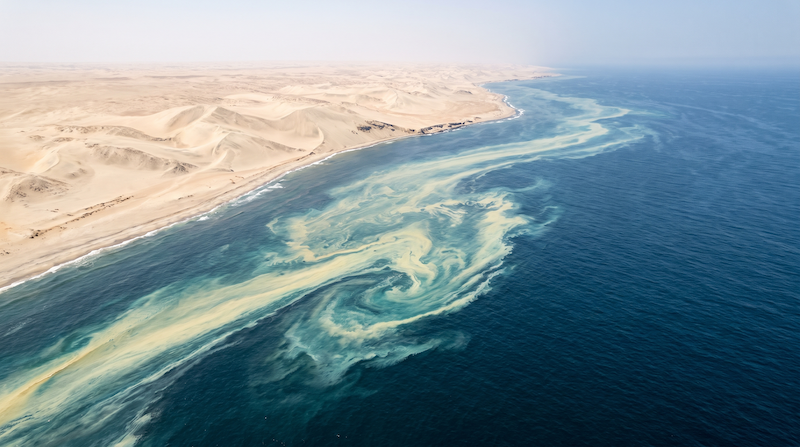
This isn't hypothetical. Off Namibia, the seafloor holds enormous deposits of organic sediment, and periodically the water column belches hydrogen sulfide toward the surface in eruptions large enough to be visible from satellites.
The water turns milky yellow-green. Fish die in numbers. The smell reaches inland towns. Local fishermen have lived with it for generations.
It's the closest thing on Earth to a working model of an anoxic ocean, running on a small scale, in real time.
The Black Sea preserves things nothing else can
The world's largest permanently oxygen-free body of water is the Black Sea. Below roughly 150 metres, over 90% of its volume contains no oxygen at all.
And that produces one of the strangest side effects in all of marine science: nothing rots down there.
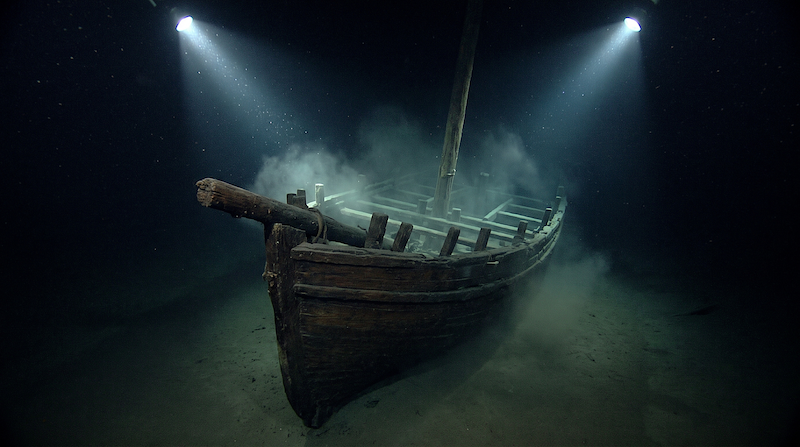
The organisms that consume wood and rope and cloth need oxygen. Without them, wrecks simply stop decaying. In 2018 a survey team found a Greek merchant ship on the Black Sea floor, more than 2,400 years old, still standing upright with its mast, rudders and rowing benches intact — the oldest intact shipwreck ever discovered.
A dead zone is also a perfect museum. I find that genuinely eerie. The same conditions that make water uninhabitable make it a preservation chamber, so the sea that kills everything also refuses to let anything decompose.
The ocean has run this experiment before
Roughly 252 million years ago, at the end of the Permian, something wiped out around 90% of marine species — the largest extinction in Earth's history.
The leading reconstruction runs like this: massive volcanism warmed the planet, warm water holds less dissolved oxygen, ocean circulation slowed, and the deep sea went anoxic. Sulfate-reducing bacteria took over and the oceans became euxinic — saturated with hydrogen sulfide.
Some researchers have argued the gas didn't stay in the water. Vented into the atmosphere at sufficient scale, hydrogen sulfide is toxic to land animals and may have damaged the ozone layer, letting UV radiation through onto the survivors.
If that's right, then the worst extinction in the planet's history was an ocean chemistry event that reached up onto land and finished the job.
Where we are now
The modern numbers are less dramatic and more uncomfortable.
Documented low-oxygen coastal dead zones have risen from a few dozen in the 1960s to more than 500 today. The Gulf of Mexico grows one every summer, driven by fertiliser runoff down the Mississippi feeding algal blooms that die, sink and consume oxygen as they decompose. It has reached the size of a small US state.
And in the open ocean, research published in Nature estimated the global ocean has lost around 2% of its dissolved oxygen since 1960.
Two percent sounds trivial. It isn't, for two reasons. It's an average across an entire planetary ocean, so some regions have lost far more. And oxygen loss doesn't scale gently — species have thresholds, and when the concentration drops past one, the local ecosystem doesn't decline, it flips.
My take
The framing I'd push back on is "the ocean dies."
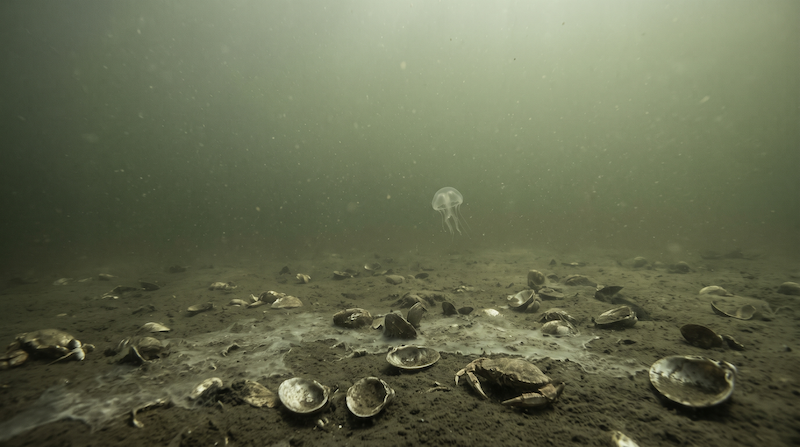
It doesn't die. It changes management. Complex, oxygen-hungry, slow-growing life — fish, corals, marine mammals, everything we care about and eat — gets replaced by microbes and jellyfish, which are ancient, tolerant and perfectly happy in conditions that kill everything else.
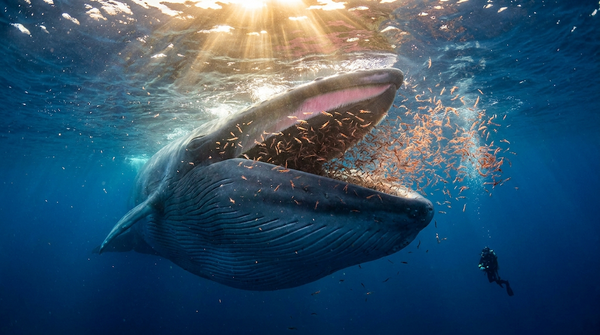
That's what makes deoxygenation different from other environmental problems. It's not destruction, it's reversion. The ocean spent hundreds of millions of years becoming an oxygen-rich place complex enough to support a whale, and the microbial version is the older, more stable default it's capable of falling back into.
The second thing worth saying: this is the rare marine crisis with a clear, boring, unglamorous fix. Coastal dead zones are driven largely by nutrient runoff, and when nutrients are reduced, they shrink. There's nothing mysterious about it. It's fertiliser policy and wastewater treatment, which is why it never trends.
The verdict
- Oxygen loss doesn't empty the ocean — it hands it to sulfur bacteria.
- Hydrogen sulfide turns water milky and colours it, and it stinks.
- The Black Sea is over 90% anoxic and preserves 2,400-year-old wrecks intact.
- Coastal dead zones have gone from dozens to over 500 since the 1960s.
The scary version isn't a silent, empty sea.
It's a sea that's still full of life — just none of it yours.