
Your Address Was Printed and Dropped on Every Door

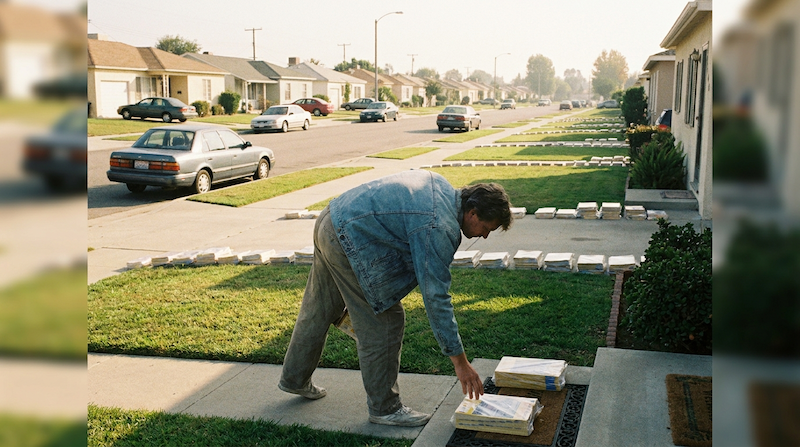
Your name. Your street address. Your phone number.
Printed, bound, and delivered free to every household in your city. Also stacked in phone booths, hotel lobbies, libraries and gas stations, where any stranger could open it and find exactly where you slept.
Nobody asked your permission. There was no opt-in box. Getting a phone meant being in the book — that was simply what a telephone was.
And the only escape route ran through the phone company's billing department.
Privacy cost about a dollar a month
If you didn't want to be in the directory, you could request an unlisted number. The phone company would agree, and then charge you a recurring monthly fee for the privilege — typically a dollar or two, forever, for as long as you had the line.
Sit with what that actually was. You were paying a monthly subscription for a company not to publish your information. Not for a product. Not for a service. For an omission.
State utility commissions regulated those fees, and they were contested for decades. Consumer advocates argued they amounted to charging people for something that cost the company essentially nothing. The phone companies argued the directory was part of the service and non-inclusion was the exception. The commissions mostly let it stand.
There was a second-tier option too — "non-published" versus "unlisted" — where you weren't in the book but directory assistance would still hand your number to anyone who called and asked. Two different prices for two different amounts of invisibility.
What people used it for
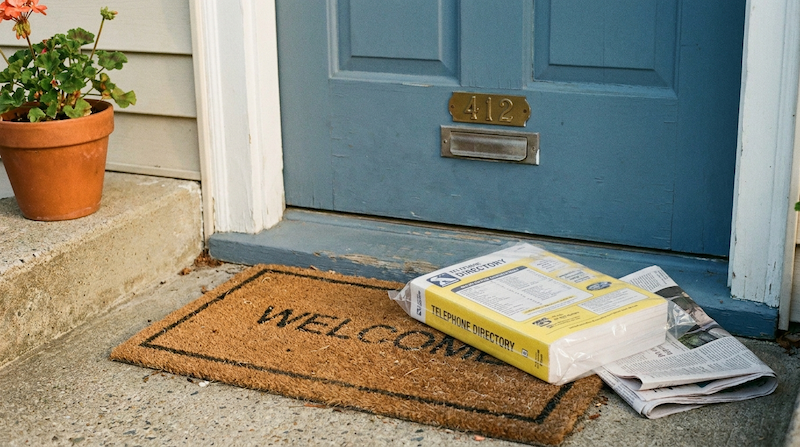
The directory wasn't neutral infrastructure. It was a lookup tool, and everybody knew it.
You used it to find an old classmate. Debt collectors used it. Salesmen used it — the phone book is the origin of cold calling as an industry. Private investigators used it. So did people looking for someone who did not want to be found, which is why unlisted numbers existed in the first place and why the fee was tolerated by people who had a serious reason to pay it.
The privacy model of that era was obscurity by friction. Your details were technically public, but finding them required a physical book, for a specific city, that you had to be holding. Someone three states away couldn't look you up without effort. Distance did the protecting.
That's the whole thing that broke.
Now you pay to be removed
Today the same information — and considerably more — sits with data brokers: companies that collect and sell personal information about people they have no relationship with.
The modern version of the unlisted fee is a removal service. You pay a subscription, and the company files opt-out requests with brokers on your behalf.
Notice the inversion. In 1975 you paid monthly to stop your data being published. In 2026 you pay monthly to have it taken down. Same recurring charge, opposite direction, and the second one doesn't work as well.
It doesn't work because deletion isn't permanent. Brokers rebuild their files from public records, voter rolls, property filings, court documents and purchased datasets. Remove yourself today and you can reappear in a few months, because the underlying sources are still there and still being scraped.
That's the real difference between the phone book and the database. The phone book was published once a year and then it was done. The database is continuously reassembled.

Something actually changed this year
Here's the part that makes this more than a nostalgia comparison.
California's Delete Act created DROP — the Delete Request and Opt-Out Platform — run by the state privacy agency. It went live for consumers on 1 January 2026, letting a California resident file one verified request that reaches every registered data broker in the state, rather than chasing hundreds of companies individually.
More than 300,000 Californians had submitted requests by this spring. As of 1 August 2026, brokers are legally required to check the platform at least every 45 days, act on requests within 90 days, and maintain suppression lists so the information isn't re-collected and resold. Fines for failing to register on the state's broker registry were doubled to $200 per consumer per day.
That suppression list requirement is the genuinely important clause, because it targets the re-collection problem rather than just the deletion.
The limits are real too. It only covers California residents. It only reaches brokers registered in California — around 500 to 600 of them, not every company holding your data. And brokers don't have to delete information the government already makes public, or data governed by financial and credit reporting laws.
So a large share of what's out there stays out there.
My take
The comparison people usually draw is "the phone book was surveillance too, so nothing really changed." I think that's lazy and it lets the current situation off the hook.
Three things changed, and they're the whole story.
Scope. The phone book had a name, an address and a number. A broker profile can carry relatives, previous addresses going back decades, estimated income, property records, purchase behaviour and inferred interests. It's not the same category of information.
Reversibility. An unlisted number worked. You paid, you were out, and the next edition didn't have you. Deletion today is a request against an industry that rebuilds from sources you can't opt out of.
Consent theatre. This is the one that bothers me most. In 1975 nobody pretended you had a choice — you were in the book, that was the deal, and the fee was at least an honest transaction. Today we have privacy policies, consent banners and opt-out links that create the appearance of control while the actual data flows continue. The old system was more honest about what it was doing to you.
What DROP represents is the first serious attempt to fix the reversibility problem — a government-run mechanism instead of a paid intermediary. Whether it works is an open question, and it won't be answered for a couple of years.
But the underlying trade hasn't changed since your grandparents' hallway table. Being reachable has always cost you privacy. The only thing up for negotiation is who gets paid to give a little of it back.